BRASIL
Brazil Without Figures - The Amazon Without Wings
by Nayra Wladimila, João Felipe Serrão y Marcos Colón
“It is far more likely that Brazil will lose its wildlife to trafficking than to climate change,” says wildlife-trafficking specialist Antônio Carvalho.
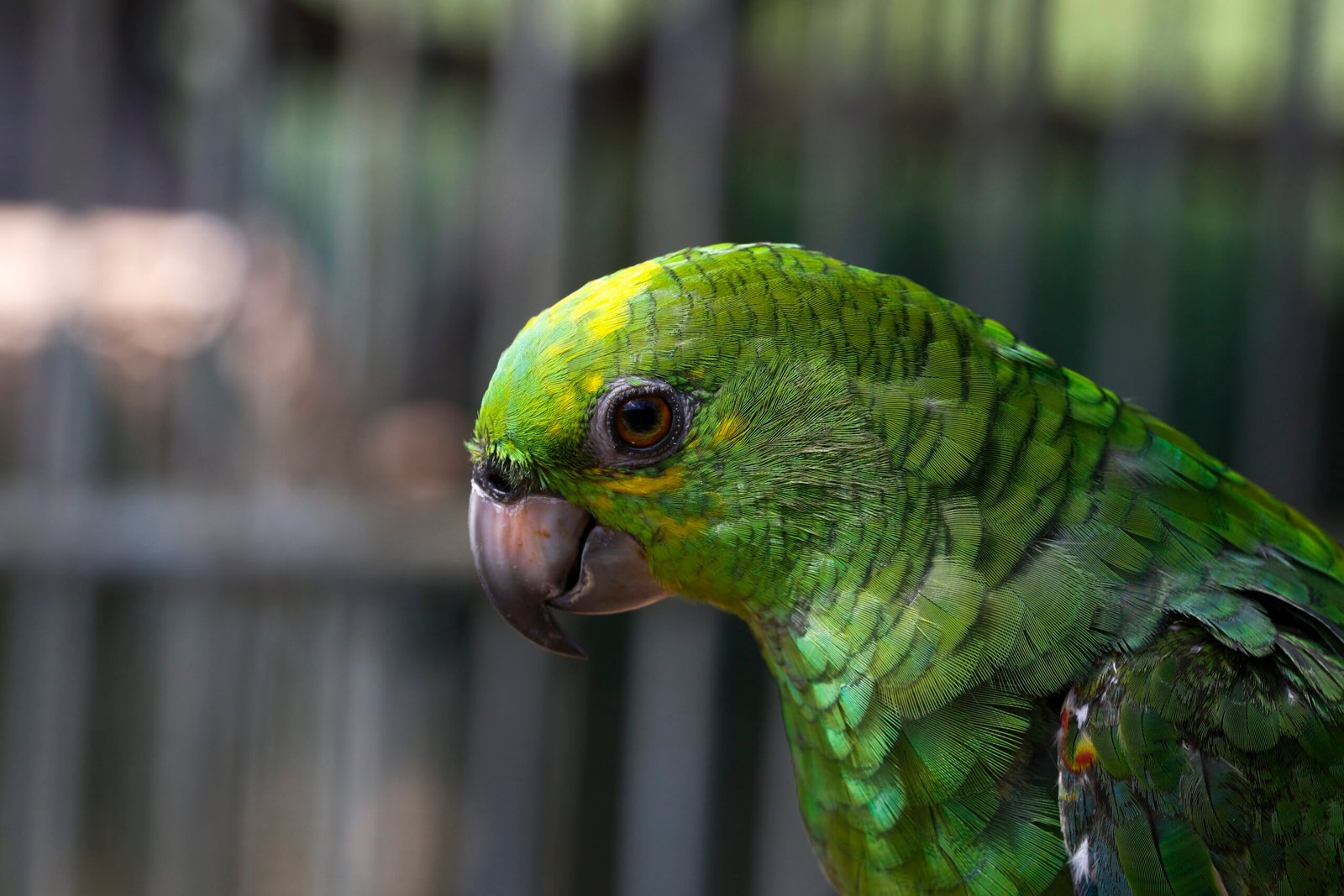
Morning at the Wildlife Screening and Rehabilitation Center (CETRAS) at the Federal Rural University of the Amazon (UFRA) in Belém, Pará, begins with the small hatch of Xaropinho’s aviary swinging open. The yellow-crowned Amazon parrot (Amazona ochrocephala), which is mostly green with a pale-yellow crown and gray beak, perches on a slender piece of wood and hops along until he reaches the opening. Veterinarian Natália Assis waits outside, holding a small piece of banana. Xaropinho has lived there ever since he was found on a boat and rescued from wildlife traffickers.
CETRAS is an expansion of UFRA’s Wildlife Clinic, created in 2013 to care for animals roaming the campus as well as specimens rescued by environmental agencies and partner institutions. Many of its collaborators are undergraduate and graduate students in Biological Sciences, Veterinary Medicine, and Animal Science.
There are currently twenty animals at the center, located within the Environmental Protection Area of Greater Belém. Between the dedicated spaces for each species, the breeze amplifies the center’s calm atmosphere, swaying the branches of mango trees and the clusters of star-shaped red ixora flowers.
Grumpy, Xaropinho spends much of the day swearing. He also tries to peck at Natália Assis. The veterinarian explains that this is his way of defending himself, and that his vocabulary reflects how he has previously been treated.
Xaropinho hops because his wings have been clipped, a sign that his captors did not keep him confined in a box. Having been fed only on flour, he arrived at CETRAS on April 22, 2025, thin, weak, and infested with mites. He underwent the center’s standard intake procedure of sedation, species identification, and surgery when necessary.
He is weighed daily, and his droppings are checked. Antiparasitic and deworming medications are administered periodically, and blood tests are performed. There are also “school” sessions: each week, in which the center’s interns devise different ways of offering food to stimulate the parrot’s cognition and reduce stress, since he will likely spend the rest of his life away from the wild.
Xaropinho received his name because April was the month when all newly arrived animals were to be named with the letter “X”—the starting letter changes monthly. He eats twice a day, morning and afternoon. His meals are prepared by staff from the Nutrition Department, who design species-appropriate diets, which are adjusted according to each animal’s progress with the food being chopped into pieces of the right size.
The team also takes turns buying food and cleaning the aviaries daily, weekends included. The parrot is taken out twice a day to sunbathe and bathe—his main moment of leisure and interaction with the humans who care for him.
“It’s a great privilege to work with these animals. Some of those here were rescued as chicks. Birds communicate more: some vocalize, parrots talk a lot. But the other species are quieter because most have evolved not to draw attention in the wild. We learn empathy to understand their needs and pick up on the quieter signs of distress,” Assis says.
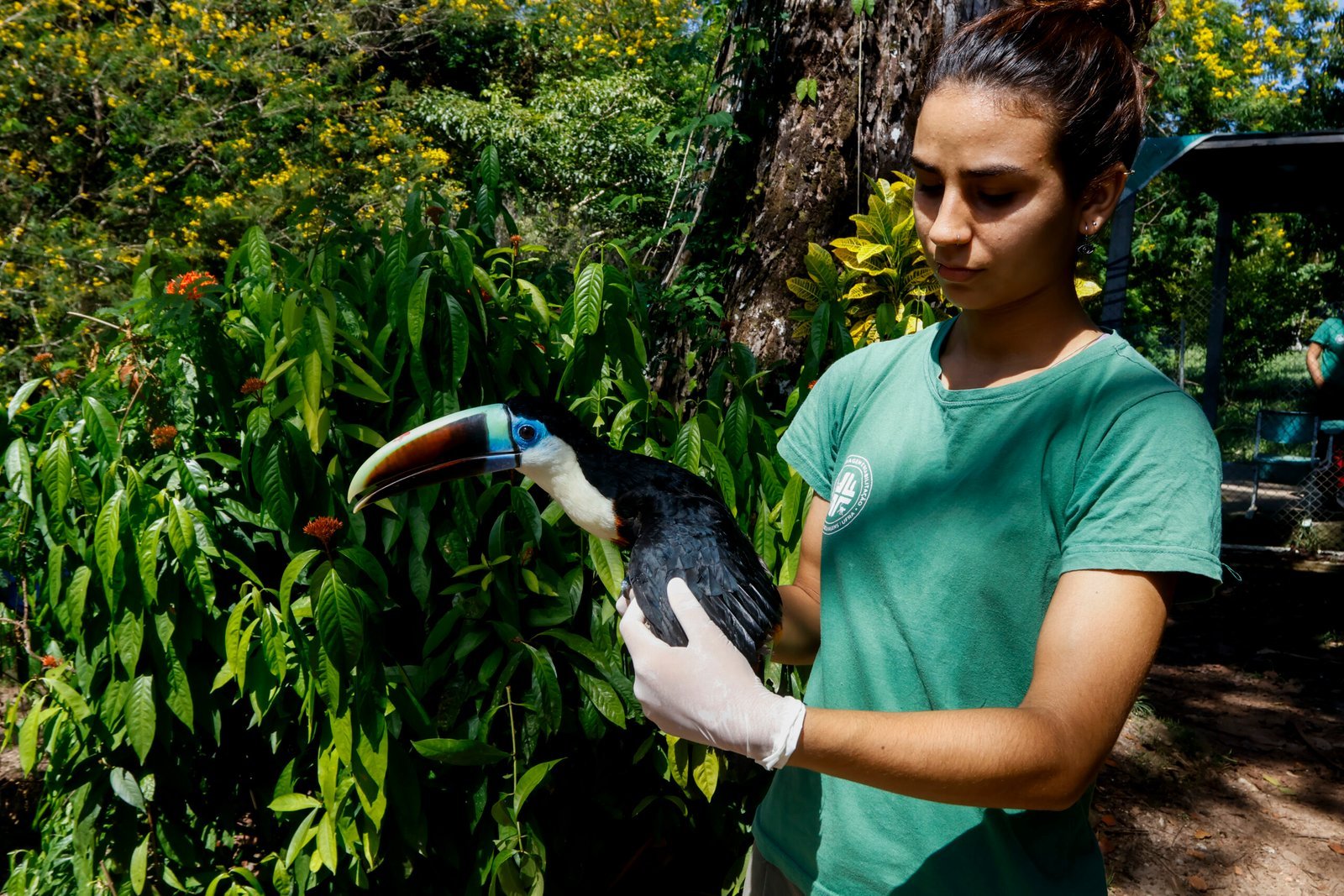
As she speaks, the parrot walks up her arm to observe the neighboring birds: Ycaro and Yara, a pair of white-throated toucans (Ramphastos tucanus) whose wings were also clipped and who have put on weight since being rescued. Each lives in an aviary within one of the center’s blocks. A metal grate separates them.
Their closest neighbor is Xanaína, a blue-winged macaw (Primolius maracana). She is so weak that her feathers still haven’t grown back, despite the special diet the team provides, and her diagnosis remains unclear. Curled up at the back of her aviary, she rarely ventures out, and her shyness—so striking next to Xaropinho’s voracious energy—has already become the subject of a social media post.
Although caregivers suspect that these and other birds have passed through the hands of illegal traders, their exact origins remain uncertain. Even the information from the organization that delivered the parrot is contradictory as they say he was brought in by the Environmental Police Battalion, which in turn reports no record of having sent any bird to the university during that period.
“Sometimes we receive seized birds, and we simply don’t know whether they lived in the wild or in captivity. That history is crucial—and often missing—when assessing whether a bird can be released. Animals raised in captivity cannot just be released; they might not survive,” Assis explains.
“The logistics of Brazil’s Legal Amazon work in the trafficker’s favor.”
Xaropinho can be considered lucky. According to Antônio Carvalho, a wildlife-trafficking specialist with the Wildlife Conservation Society (WCS) Brazil—a conservation organization founded in 2003 and dedicated to protecting the Amazon and the Pantanal—90% of animals trafficked in Brazil die during transport.
Stuffed into false-bottom suitcases, cardboard boxes, bundles of newspaper, car trunks, and even the clothes of smugglers, animals are drugged, tortured, or mutilated to avoid drawing the attention of police. “We are far more likely to lose our wildlife to trafficking than to climate change,” Carvalho says.
To illustrate the urgency of the biodiversity loss caused by the illegal wildlife trade, Carvalho points to the elephant-poaching epidemic in Africa, driven by the black market for ivory. Between 2006 and 2015, the continent’s elephant population fell by 20%, dropping from more than 500,000 individuals to around 415,000, according to a 2016 report by the International Union for the Conservation of Nature (IUCN). Tanzania, whose economy depends heavily on wildlife tourism, lost 60% of its elephants. Total extinction was averted only thanks to the publication of alarming data and the implementation of conservation policies and anti-poaching measures.
Another of Carvalho’s concerns relates to the lack of transparency surrounding what happens to animals seized by authorities, whose fate is sometimes murky.
He points to a joint operation involving the Civil Police, the Military Police, the Brazilian Institute for the Environment and Renewable Natural Resources (Ibama), and the Chico Mendes Institute for Biodiversity Conservation (ICMBio)—the latter two being Brazil’s main federal agencies responsible for monitoring and safeguarding biodiversity. In late January of this year, authorities seized ten monkeys of the genera Lagothrix and Cebus on a small farm in Pauini, in the state of Amazonas; the animals had been tied to metal rods. Four were already dead. The six survivors—who were supposed to be taken to the Wildlife Screening Center (CETAS) in Rio Branco—did not arrive there until May. For Carvalho, “this discrepancy points to a possible disconnect between the procedures that are announced publicly and the actual handling or final destination of seized animals.”
Such cases occur daily. In August, an enforcement operation by the Environmental Military Police in Óbidos, in western Pará, resulted in the rescue of 225 saffron finches (Sicalis flaveola) that were being transported by boat. The birds had been stuffed into garbage bags, without ventilation, water, or food.
Even after they are rescued, the path ahead for trafficked animals remains fraught. Their primary destination—Brazil’s CETAS centers—is bogged down by bureaucracy, chronic underfunding, and overcrowding, effectively turning them into holding warehouses. Managed by Ibama, the centers also operate with limits on the number of birds they can receive.
The CETAS closest to Pará’s capital is located in Benevides, but it is not operating. As a result, the care of seized birds falls to institutions such as the Federal Rural University of the Amazon (UFRA), as well as to “zoos, licensed breeders, and research institutions with the technical capacity to take them in and provide initial care until their final destination, or to transfer them to other CETAS across Brazil,” as Ibama explains.
According to the agency, more than 22,200 wild animals were seized in 2024 alone, all of which were sent to CETAS facilities.
Number of birds handled at each CETAS
Paulo Henrique Demarchi, technical advisor to the Environmental Crimes Combat Group of the Federal Highway Police, explains that Ibama shelters concentrate rescued wildlife in the northern and northeastern regions of the country, while in other regions reception is distributed among many organizations and zoos, as was the case with two otters that were at UFRA and were then sent to Taubaté Zoo in the state of São Paulo.
According to Demarchi, “the Federal Highway Police is one of the forces that most frequently apprehends traffickers and rescues wild animals.” As part of their training, they take a course on environmental crimes, which equips them to combat trafficking.
Another agency involved in rescues is the Civil Police. They may have been the ones to find Xaropinho, although Letícia de Abreu, commissioner of the Specialized Division for Environment and Animal Protection in Belém, found no records of him or any of his neighbors.
Abreu emphasizes that the offenders they investigate usually keep animals in the forested areas where they capture them and personally sell them at local markets. According to Abreu, depending on the number of animals and the length of time they have lived in captivity, it is sometimes not even “worth it” to separate them from their owners. “When we see that it is already a domestic animal, we leave the person as its custodian until the judicial process is complete,” she says.
In other cases, animals are sent to wildlife shelters such as CETRAS at UFRA. “But very few of them manage to return to the wild after their stay at the shelter,” Abreu adds. Only Brazilian species have been rescued, with the chestnut-bellied seed finch (Sporophila angolensis) and the red thrush (Turdus rufiventris) being the most common birds. “They are not sold much online. At least, reports of this kind of sale rarely reach the police station,” she states.
The lack of integration between agencies weakens the fight against wildlife trafficking
In Brazil, no one can provide an exact figure for how many wild animals are captured each year as there is no central agency that consolidates and quantifies the lives lost to this crime.
Although state institutions such as the Acre Institute of the Environment, the Amazonas Environmental Protection Institute, the Civil and Military Police, and the Public Prosecutor’s Office work on different fronts, the Public Prosecutor’s Office itself acknowledges that there is no consolidated national database that unifies seizures, investigations, and judicial outcomes related to wildlife.
Reports from WCS Brazil note that administrative proceedings and infraction notices are typically sent to the Public Prosecutor’s Office or other agencies via email. To access information from another institution, a formal request must be submitted, specifying the desired data, so that the organization responsible can manually extract the information and send it as a report. Ibama has some technical cooperation agreements that allow restricted access to its databases, but there is no integration that permits direct queries or cross-referencing between different systems.
This fragmentation is a result of decentralization, which, while offering some advantages—such as enabling local agents to respond more quickly to incidents—creates dispersed, individualized record-keeping. The absence of a unified database and the lack of connectivity between systems make it virtually impossible to identify activity patterns, transport routes, or links between seizures in different territories.
It is common, for example, for a trafficker to be charged in one state and then, months later, be apprehended in another without the authorities realizing it is the same individual. Similarly, animals confiscated during state operations often reach their final destination without their true origin being known, because the systems do not allow tracking of the seizure’s source.
The lack of standardization also affects the quality of information. Many systems group all types of environmental crimes into a single database, with free-text fields and errors that make searching and filtering difficult. Additionally, incidents of illegal animal possession are often not classified as trade due to the lack of direct evidence, so not all trafficking cases are recorded.
According to WCS Brazil, the situation is further exacerbated because wildlife crimes are not among Ibama’s top priorities, its efforts being focused on combating deforestation and forest crimes. This is particularly the case in the Amazonian states, where the few available personnel are almost exclusively assigned to halting the advance of illegal logging.
In the absence of a robust system, estimates are used. The World Animal Protection non-governmental organization calculates that up to 38 million wild animals are captured in Brazil each year, generating approximately $1 billion in revenue, representing 15% of the global wildlife trade.
Wildlife trafficking is the third most important illegal activity in the world, surpassed only by drug and arms trafficking, according to the United Nations (UN). In its first report at the beginning of the 2000s, the National Network to Combat Wildlife Trafficking (Renctas) estimated that tens of millions of animals are captured annually, most being birds, which account for 80% of the species smuggled in Brazil, according to World Animal Protection. Data on animals rescued by Ibama between 1999 and 2025 corroborate these estimates.
Wildlife trafficking does not only involve the sale of live animals. It is also a crime to transport or possess their parts—feathers, teeth, bones—and to carry derivative products: eggs and meat of freshwater turtles, oil extracted from pink river dolphins, jaguar skins, bird feathers used in handicrafts, and even animal-based creams, which are often sold in regional tourism. A notable example occurred in Pará in 2016, when Ibama seized parts of 19 jaguars—including heads, skulls, paws, and skins—in a single operation that received widespread coverage at the time.
Routes and Methods
According to public data from the Federal Highway Police, environmental crimes are the most numerous in the Legal Amazon, with the states of Mato Grosso, Pará, and Amazonas leading in recent years. However, when compared to the rest of the country, states outside the region, such as the Federal District, Mato Grosso do Sul, and Bahia, record higher figures. Bahia shows striking differences, as can be seen in the table on Environmental Crime Data in Brazil.
“Until 2024, there was an initiative in Bahia called the FPI [Integrated Preventive Surveillance], which brought together the Federal Highway Police, the Public Prosecutor’s Office, Ibama, and every possible public agency. They went through the cities encouraging people to voluntarily surrender animals. But not all of them came from trafficking; some people simply had a few irregular birds. Still, the Federal Highway Police were already putting pressure on traffickers there,” explains technical advisor Paulo Henrique Demarchi.
There are other reasons for the lower number of seizures in the Legal Amazon. It is important to emphasize that this is the largest rainforest on the planet, where many communities and municipalities are accessible only by plane or boat. Population density is low, and in some areas, a person can travel for kilometers without seeing a road, or even a house. Remote municipalities are simple, with populations that must sometimes travel for days to reach a hospital. Dirt roads, when they exist, are the norm. The result is Brazil’s smallest road network, which is poorly maintained in many areas.
Demarchi explains that in this region, a single police base is responsible for a much larger area than bases elsewhere in the country. Moreover, the roads are not privatized, like they are in the south and southeast, which results in more precarious infrastructure. Police officers often have to attend to accident victims, especially when ambulances fail to arrive on time.
The northern region thus becomes less attractive to Federal Highway Police officers. Most come from other parts of Brazil, typically working there at the start of their careers, often returning to their home regions after a few years. Being less experienced, they also find it harder to locate offenders. “As we move toward the northeast, southeast, and south, we find officers with more experience, which increases the effectiveness of surveillance,” Demarchi explains.
Nevertheless, the consultant notes that the Federal Highway Police currently have the largest staff in its history and plans to train an additional 267 officers. Demarchi also emphasizes that trafficking routes are not confined to the rainforest. Many animals seized by the Federal Highway Police come from the Caatinga and Cerrado biomes. “In the Amazon, it is harder to seize large numbers of smuggled animals in a single operation. We often seize 30, 20, or just half a dozen at a time,” he says. This is because, according to Demarchi, “The logistical structure of the Legal Amazon favors traffickers,” as the dense forest makes police operations more dispersed, increasing the chances that traffickers will avoid regular checks.
For more than four centuries, the ownership and trade of wild animals were poorly regulated in Brazil. The Civil Code of 1916 treated wild animals as res nullius, things without an owner that anyone could appropriate. The Hunting Code of 1943 reinforced this proprietary logic. A turning point came with the 1967 Fauna Protection Law, which declared wildlife public property under state protection and prohibited the use, persecution, destruction, hunting, and capture of wild animals, their nests, or shelters.
In 1988, the new Federal Constitution elevated the ecologically balanced environment to a fundamental right, establishing that the government has the responsibility to “protect fauna and flora, forbidding by law practices that endanger ecological function, cause species extinction, or subject animals to cruelty.” This was the first time the protection of wildlife was explicitly mentioned in a Brazilian constitution.
Today, all wild animals in Brazil are considered of collective public interest, protected by the state, and capturing, transporting, or selling them without authorization is illegal. However, the law is not always enforced effectively. Under the Environmental Crimes Law, capturing, possessing, or selling native fauna without authorization can result in six months to one year of imprisonment and fines ranging from R$500 to R$5,000 per animal, depending on species and circumstances. In practice, state responses often consist of administrative fines, which are poorly enforced. Such lenient penalties fail to deter networks that operate with high margins and low risk, as intermediaries acquire animals at low prices.
The Highways Most Used by Wildlife Traffickers
According to a report by the Traffic NGO, rivers are the primary transportation routes in the Amazon region. The rivers most commonly used by traffickers are the Purús, the Madeira, and the Negro. The Purús originates in Peru and flows into the Solimões River in Brazil, crossing the states of Acre and Amazonas. It is winding and navigable along almost its entire length, making it a preferred route for transporting fish and turtles. The Madeira, between Bolivia and the Brazilian states of Rondônia and Amazonas, is used for species destined for consumption. The Negro, which flows mostly through Amazonas and also touches Venezuela and Colombia, is used to move ornamental fish for the international market, especially around Novo Airão, in the Manaus metropolitan area.
Aircraft are usually used to transport more valuable species, avoiding mortality during land or river transport and minimizing the risk of confiscation by environmental inspectors. According to the National Network to Combat Wildlife Trafficking (Renctas), the most frequently used airports for national and international routes are Belém and Santarém (Pará), Manaus (Amazonas), Oiapoque (Amapá), and Boa Vista (Roraima).
Reports prepared by Rafael Leite, a wildlife trafficking specialist at WCS, detail operations where these states served as criminal routes. One example is Operation Safe River, carried out in 2016, which coordinated efforts with the Civil and Military Police of Pará, the State Secretariat for Environment and Sustainability of Pará, and the Federal Public Prosecutor’s Office. Five people were arrested at Santarém airport and led to a warehouse containing 400 ornamental fish and 58 stingrays, all intended for illegal export.
The following year, Operation Poseidon dismantled trafficking along three routes: Belém, Santarém, and Manaus. Ornamental fish were captured in the Tapajós River basin in Itaituba and stored in plastic bags with limited water and oxygen. Beyond the high mortality rate, there was another aggravating factor as the species were being used for money laundering.
The Size of the Illegal Market
Ornamental fish are the most seized type of animal in Brazil, followed closely by birds and reptiles. This ranking is mirrored in the legal market: between 2010 and 2018, nearly 400,000 fish were legally exported to countries such as Germany, compared with more than 45,000 reptiles and 37,000 birds (see the chart List of Importing Countries and Animals Imported from Brazil, 2010–2018).
Birds dominate the online illegal market and are the most frequently sold digitally. In 2024, the year of the latest Renctas report on this type of commerce, 1,684 ads were for birds, compared with 610 for reptiles, which ranked second. The three most advertised species were the greenish grosbeak (Saltator similis), the blue-and-yellow macaw (Ara ararauna), and the blue-fronted Amazon parrot (Amazona aestiva).
The chestnut-bellied seed finch is the most sold bird legally and also the most trafficked in Brazil. Two of these birds live, each in a separate cage, in a commercial establishment in Boa Vista, in the state of Roraima, since before the COVID-19 pandemic. The owner acquired them from an illegal seller, has not named them, and only interacts with them when cleaning the cages or replenishing their food and water.
Sometimes he even forgets to remove the cloth that covers their cages so the birds can sleep better, and they end up spending long hours shut in. Their routine boils down to short flights that are more like zigzag hops inside the cage. Singing? You hardly ever hear it. Their only leisure comes from the occasional “vacations” they take at their owner’s family farm in the countryside.
Sérgio Dias, an official*, often observes the birds at the store. He encountered the same species caged in Rurópolis, in Pará, at a private home. The owner had bought it from a man who bred birds at home and advertised them for 600 reais (around 150 dollars) each in 2019. “It wasn’t his main income; it was extra. But you just had to call, and he would bring a bird he had captured in the forest,” Dias recalls.
While a boa constrictor might arouse suspicion and questions about its acquisition, birds are so integrated into daily life that keeping or selling them often seems normal. In many Amazonian cities, the prevalence of backyards and balconies and houses without walls or surrounded by trees and grass in towns and communities means birds appear daily to forage for fruits and other food.
Species like the chestnut-bellied seed finch are prized and expensive, sought after by collectors and hobbyists alike for their song, beauty, and rarity. “The presence of the cockatiel (Nymphicus hollandicus), with 122 online listings, shows that even domesticated species are part of this market, be it legal or illegal, and are often used to disguise the sale of protected species,” according to the Renctas report.
The report highlights the diversity of species advertised online, including native birds such as the chestnut-bellied seed finch (Sporophila caerulescens) and the blue-and-yellow macaw (Ara ararauna), as well as exotic species illegally introduced into the country, like the corn snake (Pantherophis guttatus). This shows that trafficking operates on multiple fronts. The report notes: “This practice increases ecological risks, with potential impacts on local biodiversity, and poses serious public health threats due to the transmission of zoonoses.”
After birds, reptiles, including iguanas, snakes, and lizards considered exotic pets; ornamental fish for aquariums; and small mammals such as marmosets and tamarins are the most offered animals online. Other listings include scorpions, spiders, crustaceans, and even starfish.
The average value of the 2,936 WhatsApp listings collected between July 1 and December 31, 2023, was 489 reais (90 dollars), amounting to an estimated total of 1,730,287.90 reais (approximately 325,000 dollars).
Almost half of the posts came from the state of São Paulo (44.14%), which accounted for more than 60% of sales. Pernambuco, which only had 5.52% of the listings, generated 131,050 reais (around 24,500 dollars), suggesting it may serve as a hub for selling high-value animals such as exotic birds and reptiles to collectors.
São Paulo, Paraná, Santa Catarina, and Rio de Janeiro have the highest number of listings, likely because they are the most populated states, with greater access to transportation and consumers. In northern Brazil, most listings come from the areas around Macapá (Amapá), Belém (Pará), and the border region of Amazonas with Rondônia and Acre.
The online illegal trade is not limited to threatened species. It also involves animals considered of least concern, though their status could change depending on commercial demand.
One notable finding of the institution is that people involved in WhatsApp trafficking are generally aged between 21 and 30 years old (254 listings) or 11 and 20 years old (246 listings). Beyond their familiarity with digital platforms and the advantages of encryption and anonymity, they appear largely unaware or indifferent to the environmental and legal severity of their actions.
Dener Giovanini, co-founder of Renctas, explains that trading groups can be generalist, region-specific (such as São Paulo or Pará), or focused on types of animals, such as birds, arachnids, snakes, or primates.
The posts analyzed by the organization indicate that this is a highly lucrative and structured activity, often disguised as amateur or enthusiast collectives. The most used platforms in Brazil for this purpose are Facebook and, especially, WhatsApp, which offers end-to-end encryption and control over group membership.
“It’s harder to enter WhatsApp groups because buyers and sellers are very careful not to be reported. To be admitted, you usually have to answer a series of questions. Few allow you to just observe. They are suspicious of anyone like that. Of course, we use fake profiles,” says Dener Giovanini.
To make tracking even more difficult, traffickers use digital SIM chips linked to foreign numbers, mainly European and Asian, called eSIMs. Another strategy is to create fake ads for other goods, like cell phones, on e-commerce platforms such as Mercado Libre. The traffickers set the product price to match the animal’s and then send the link to the buyer. This method protects both the seller and buyer, with the seller receiving the money through the financial system, and the buyer being safeguarded through the platform. Once the transaction is approved, the shipment is organized using clandestine couriers or postal services.
Descriptions include prices, payment methods, and sometimes shipping or delivery promises. There is also the so-called “rollo,” a direct exchange of animals between breeders and traffickers, often without monetary transactions. This practice facilitates species circulation across the country, increasing the risk of zoonoses. Users often display the animals, which drives demand, raffle them, and even advertise other goods, such as fake invoices and weapons.
Other social networks are also used, albeit less prominently, and are gradually being monitored by the NGO. “We have someone on Reddit, and others on Discord, Telegram, and Signal,” says Dener Giovanini. “But generally, the largest activity occurs through WhatsApp and Facebook, and in some cases Instagram. When dealing with more valuable species, they seek alternative communication methods to maintain discretion.”
Municipalities with the highest wildlife seizures
Click on each municipality to see the most affected species
Exploitation of Traditional Knowledge and Poverty
For the Awá-Guajá, Indigenous peoples living in what remains of the Amazon rainforest in the state of Maranhão, every creature in the forest “raises” the others. Rearing is not possession; it is proximity. Red brocket deer raise agoutis and butterflies, palm trees raise cicadas, and capybaras raise rufous-bellied thrushes.
Animals grow up freely, and once they reach maturity, they return to the forest. Returning is the verb that sustains sustainability – the animal’s place is never left empty; it goes back to disperse seeds, to be prey or predator, and to keep the forest functioning.
In the village, the divide between house and forest, domestic and wild, simply does not exist. The bond is dense, with women turning monkeys’ alarm calls into protection, using them as warnings against venomous animals—snakes or spiders—that might appear along their path.
The Arara people—arara means “macaw” in Portuguese—live in the state of Pará. According to their cosmology, before life began, there was only sky and water, separated by a bark-like layer that served as ground for its inhabitants. Akuanduba, the guardian deity, would play a flute to restore order whenever a fight broke out.
One day, during a great quarrel, the furious crowd ignored Akuanduba’s flute until the bark that separated sky and water finally broke. The birds of the Amazon carried some survivors back to the sky, where they became stars; others they left on fragments of bark floating on the water. Thus, the Arara people were born; forest-people who chose to remain among the trees, far from the waters.
Today, those same macaws that once helped humans become stars and survive on Earth have been reduced to merchandise. Every feather plucked is a broken thread of the myth. From spiritual beings, they have become luxury commodities, caged or shipped across the world to satisfy someone else’s greed.
Rare-plumaged birds have held great value since the sixteenth century, when the Amazon’s biodiversity first ignited Europe’s appetite for luxury. The beauty and exoticism of the fauna were treated as riches to be extracted. During the era of the Great Navigations, noblewomen flaunted monkeys as pets, wore hats and dresses adorned with macaw feathers, and kept birds reputed to speak. The exotic animal as a symbol of status has simply migrated to nature-tourism selfies and the online exhibition of unconventional pets.
For many Indigenous communities, this kind of trafficking is not merely an environmental crime, it is a rupture in an ancestral cosmological ethic. A legacy of colonization, the capture of animals historically formed a bridge between Indigenous peoples and colonizers. Collecting and delivering specimens was carried out by Indigenous groups, often against their will, because only they knew where and how to find the animals. This dynamic persists today, whereby traditional and riverine communities living in conditions of social vulnerability capture wild animals to feed a clandestine supply chain that pays almost nothing at the source and multiplies profits in the cities.
In its 2024 report, Renctas revealed a thriving illegal market in featherwork, much of which is produced by Indigenous makers. Hundreds of birds are killed each year to supply architectural and decorative markets, private collections, and, in some cases, religious rituals.
The Brazilian Constitution guarantees the traditional use of artifacts within Indigenous communities, but the law prohibits their commercial sale. Some pieces purchased in Amazonian villages for little more than a handful of dollars are later sold for tens of thousands of euros in Europe.
According to Dener Giovanini, the first alerts received by the organization came from Indigenous leaders in the Xingu River region, in the state of Pará, who reported their struggle against the illegal sale of their traditional crafts—headdresses, bracelets, necklaces, and other objects adorned with wild-animal parts such as parrot and macaw feathers, hawk talons, and jaguar and monkey teeth and bones. The high demand was causing the disappearance of bird species in some regions. Based on these complaints, Renctas began monitoring the online trade of these items.
After mapping the illegal featherwork market in Brazil through its Online Wildlife Trade Monitoring Program, Renctas sent a detailed dossier to Ibama, triggering several investigations. Platforms such as Instagram, Facebook, and WhatsApp have become major showcases for this illegal commerce, with negotiations taking place directly through them. Another common destination for Indigenous featherwork is high-end décor shops in major urban centers like Rio de Janeiro and São Paulo. There is also active international trade, particularly on art-auction websites.
According to the director of Renctas, intermediaries exploit the severe social vulnerability of many Indigenous communities, often living in extreme poverty, by purchasing pieces for as little as 50 to 200 reais (10 to 38 dollars). Those same items are later sold in architecture and décor stores for up to 20,000 reais (3,800 dollars). On the international market, some pieces can exceed 70,000 dollars.
What exists is a clear pattern of socioeconomic exploitation of vulnerable Indigenous communities, says Giovanini. The weakest and most exploited link in this economic chain are the Indigenous makers themselves. These are the people who capture the animals in their habitat and produce the artifacts, but they are the ones who receive the least for their labor.
Indigenous peoples also suffer other harms as the demand for crafts directly affects the abundance of species in their territories. They are left with a degraded environment and persistent poverty, while traders line their pockets.
Contrary to common belief, the feathers used in a headdress do not simply fall naturally from birds. Dozens of birds must be caught and killed to make a single headdress, with a significant impact on wild populations. According to Giovanini, 10, 12, or even 15 macaws may be needed for a single piece. A harpy-eagle headdress—the species known as the royal eagle—requires four birds. “We have seen ritual headdresses that require at least 80 parrots,” he says. “When this level of impact falls on species already threatened with extinction, the risk of their disappearance rises dramatically.”
To address this problem, Renctas created the project Tradition with Conservation. As part of the initiative, the organization trains Indigenous people from various Amazonian villages to create featherwork using artificial feathers. Designers and ornithologists have developed synthetic feathers that closely mimic natural ones in shape, color, and pattern. A virtual store now sells the headdresses made by Indigenous artisans, with all profits going directly to the communities, thus providing a path away from illegal intermediaries.
In this way, communities preserve ancestral knowledge of headdress making, taught by Indigenous masters, while contributing to the conservation of wild birds and strengthening household incomes without relying on middlemen.
Brazil and CITES
In 1975, Brazil ratified the Convention on International Trade in Endangered Species of Wild Fauna and Flora (CITES), a global instrument that regulates international trade in threatened species, establishes risk categories, and requires member countries to implement measures to curb violations, seize specimens, and coordinate international enforcement.
Today, approximately 5,950 animal species and 32,800 plant species are listed in Appendices I, II, and III, in increasing levels of protection. More recently, in June 2025, the UN General Assembly adopted Resolution 79/313 (circulated as A/79/L.96), which acknowledges the zoonotic risks and corruption linked to the illicit wildlife trade and urges States to classify the trafficking of protected species as a “serious crime.” These measures follow the standards set by the UN Convention against Transnational Organized Crime.
During the 34th session of the Commission on Crime Prevention and Criminal Justice, held from 19 to 23 May 2025, a draft resolution—reportedly proposed by Brazil—circulated with the aim of encouraging States to criminalize the possession, transport, sale, and export of fauna and flora obtained without authorization, even when the species are not listed under CITES. These resolutions signal a shift in international law and cooperation, establishing shared intelligence, digital tracking, and financial investigation for transnational networks. Brazil has positioned itself at the forefront of these developments, aligning its domestic agenda with global standards against wildlife trafficking.
Juliana Ferreira, executive director of Freeland Brasil, an NGO that since 2012 has worked to protect vulnerable communities and wildlife from organized crime and corruption, combating wildlife trafficking and advocating for stronger public policies for biodiversity conservation, stresses that this international momentum must also resonate domestically.
“Brazil needs to better enforce the laws it already has, strengthen the international framework, and establish a coordinated national plan,” Ferreira says. “If Law 9605, for example, were properly applied, the penalties for professional traffickers could be increased through aggravating factors and related offenses. Wildlife crime affects not only the survival of species but also ecosystems, environmental services, the economy, and public well-being.”
On November 05, Brazil’s Chamber of Deputies approved a bill increasing the penalty for killing or capturing wild, native, or migratory animals without a permit, more than doubling the sentence from the current six months to one year to a prison term of two to five years. The bill now moves to the Senate for approval and presidential sanction. At the time of writing, the new law has not yet entered into force.
Brazil currently claims global environmental leadership, with the 2025 UNFCCC COP30 taking place in Belém and the 2026 Convention on Migratory Species COP15 in Campo Grande. The country now has an opportunity to align discourse and practice by updating its legal framework to economically deter the supply chain and disrupt its financial logic.
In the Amazon, people’s relationship with wildlife is shaped by traditional and subsistence practices. Indigenous and riverine communities hunt game, fish native species, and use animal parts for handicrafts and traditional medicine. But there are also illegal activities with strong economic appeal, such as wild songbird fights and the trade of prized species like the chestnut-bellied seed finch (Sporophila angolensis) and the great-billed seed-finch (Sporophila maximiliani), which are captured for singing competitions.
Between 2012 and 2019, 1,171 chestnut-bellied seed finches were confiscated in the Amazon alone, often in groups of more than ten individuals. The ultimate destination of these birds, whether domestic or international, remains poorly documented, but it is known that singing competitions generate significant revenue not only in Brazil but also in other Latin American countries and even in the United States.
A Faceless Problem
The Amazon is an intricate web of relationships. A captured parrot is not just one body removed; it is an ecological link lost. Psittaciformes—parrots and macaws—disperse both large and small seeds, acting as gardeners of the forest.
When their populations decline, the regeneration and structure of the vegetation are disrupted. As flocks disappear, so too does the rainforest’s ability to renew itself.
“There is trafficking because there is demand,” says Juliana Ferreira, executive director of Freeland Brasil, an NGO that has worked since 2012 to combat wildlife trafficking. Recently, the organization has joined forces with public and private entities to detect illegal wildlife transport through one of its main channels – airplanes.
At the airport of Bahia’s capital, one of the country’s key hubs for wildlife distribution, Freeland trained Civil Aviation Security Agents, who inspect baggage using X-ray equipment under Federal Police supervision, to recognize concealed animals.
“Many tourists try to take bushmeat or starfish with them. Many mean no harm—it could be our aunt. That’s not the kind of person we want to catch. We’re not after the guy selling a few birds in a small town, but the trafficker moving 1,400 birds, like the shipment seized in Minas Gerais in June. But once agents ask where something came from, we begin tracing the supply chain,” Ferreira explains.
Putting this idea into practice was not easy. To begin with, the National Civil Aviation Agency oversees airports and supervises the agents, but the agents themselves are hired by the private companies that manage these facilities. Considered low-level employees, they are subcontracted, which weakens their labor protections. They are also on the front line of inspections and thus the first to face retaliation when errors occur or when arrogant passengers resist having their luggage opened.
Ibama, meanwhile, is present in only a handful of airports. In Guarulhos, São Paulo, the country’s largest airport and the main gateway for international flights, there isn’t even a facility to store seized wildlife. Airport staff themselves end up discarding items such as fins and bladders from dead animals.
Salvador’s airport in Bahia does host an Ibama office with a staff member known to Freeland, and one of the NGO’s environmental consultants, Lucas Tino, is a former Ibama technician who worked at Guarulhos airport. The company managing the Salvador terminal was also open to negotiation. All this made the partnership possible.
Since the program began in mid-August 2024, detections of illegal wildlife transport at Salvador’s airport have risen by 2,500 percent. The main reason is the shift in perspective among the agents, who now understand that it is prohibited to transport meat and objects made from wildlife that they used to overlook in luggage, and who can now recognize when a live animal is being moved illegally.
“People don’t always know they can’t do that. They tell us they’ve always seen it done,” says Ferreira. “I always run into a bird fancier,” jokes Lucas Tino.
Constant communication among agencies, coalitions with other NGOs and policymakers to strengthen environmental agendas, and the production of open-data reports are some of Freeland Brasil’s strategies. Beyond the effectiveness of the airport project, the organization was also behind the complaint that launched the investigation into a criminal ring from Argentina that organized illegal safaris targeting jaguars and other species in Argentina, Bolivia, and Brazil, for up to USD 50,000. It is the largest wildlife-trafficking case in that country.
In 1999, Renctas, which monitors environmental crimes around the clock, delivered a dossier containing 7,000 illegal ads posted on platforms such as Orkut and Mercado Libre to the Federal Prosecutor’s Office. The document was received at the time by prosecutor Anaiva Orbest, now widely known for her active role in prosecuting environmental crimes. In 2022, thanks to another dossier from the organization, Facebook ended up paying BRL 10 million (USD 1.9 million) in fines to Ibama for facilitating illegal wildlife sales on its platform. Since its founding, the network has trained 7,000 public officials.
The success of the Salvador airport project shows that one path to combating animal trafficking lies in bringing together public and private actors, raising awareness, and increasing penalties. “The laws already exist and enforcement is improving, but the penalties are still far too low,” Ferreira notes. The men responsible for trafficking the birds simply signed a commitment to appear in court and were released. The birds are now at CETAS.
Speaking of rescue centers, Xaropinho’s case has also reached its conclusion. After four months of rehabilitation at the Cetras in Belém, the Amazonian royal parrot, who once approached people asking for coffee, a habit stemming from his strong bond with humans, relearned to eat fruits, vegetables, and proteins. He was then transferred to the Sargento Prata Municipal Zoo in Fortaleza, Ceará, where he now lives among others of his species. Even so, he carries the imprint of human contradiction, having been harmed by the hands that mistreated him and saved by the hands that cared for him. Xaropinho will never again fly freely in the wild, and perhaps in the quiet stillness of his wings lies the most painful memory of what it means to be free.
Despite the volume of existing information, data on trafficking in the Amazon remain fragmented. State and federal agencies do not work together, and many seizures never make it into national databases.
Statistics capture only a fraction of what truly moves through the region. As long as legislation remains uneven across Amazonian countries, borders will remain porous, both domestic and international demand will remain high, and the region’s wildlife will continue to face intense pressure from criminal networks that operate with efficiency and discretion.
In the end, it is a call to relearn what macaws and the Awa-Guajá have always understood: no one possesses the forest without becoming lost in it. The Amazon needs living wings, not wings hanging on a wall. And Brazil must learn to count what it loses to stop losing it.