COLOMBIA
The Secret Current: The Flow of the Ornamental Fish Trade in the Colombian Amazon
by Santiago Wills
According to the project Autopistas de depredación, ornamental fish are the most trafficked animals in the Amazon. Journalist Santiago Wills investigated their legal and illegal trade to understand how a business that begins in the country’s major river basins ends in home aquariums around the world actually works.
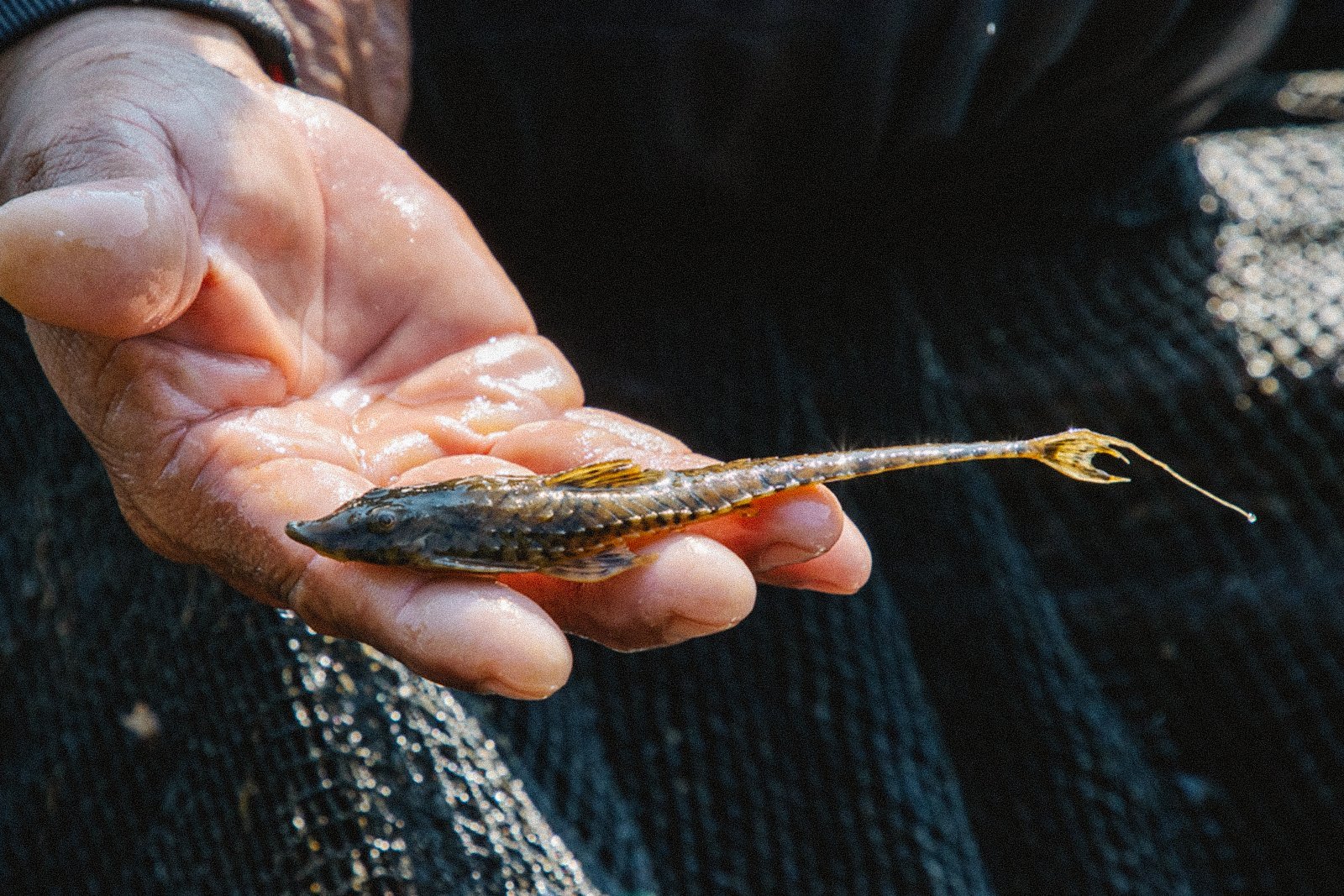
We set out for La Libertad because we had been told that an elderly Yagua man, someone named Amador, lived there and knew of a pool teeming with ornamental fish. The location had to remain secret because, according to the old man, the pool was home to otocinclus (Otocinclus), a genus of small catfish prized by aquarium hobbyists for their gentle temperament and their ability to keep algae growth in check. For months, exporters in Bogotá had been urgently requesting them and—something unusual, according to buyers in Leticia—were willing to pay reasonably well for each specimen between 2.4 and 5.5 centimeters, depending on the species. Their burnished bodies, tiny steel torpedoes crossed by a black horizontal line, are one of the few ways those who depend on ornamental fishing in the Colombian Amazon can make it to the end of the month. The key is volume, they say: otocinclus move in large shoals, which means each haul can yield thousands of fish. That was why the Yagua elder’s pool was a gold mine to be harvested before anyone else found it.
We set off in search of the fish on the morning of September 2. The sun beat down on the sepia waters of the Amazon River as we left behind the Leticia Aquarium, the collection center run by the Dos Santos family, among the first in the city to fish for ornamental species. We traveled in a seven-metre wooden canoe—barely a metre and a half wide—sitting on three planks. At the bow, Alexander Valencia Dos Santos—a 45-year-old fisherman everyone in the area calls Jimmy—signaled to Robinson Rodríguez Do Nascimiento, a 34-year-old Brazilian nicknamed Preto, who steered from the stern with the peque peque, a small outboard motor with the power of a lawn mower. The fishing gear—traps, baskets, nets—the bags, and blue plastic sheets meant to create makeshift tanks inside the canoe for the otocinclus, were piled in the middle, just in front of a third bench where I struggled to settle in.
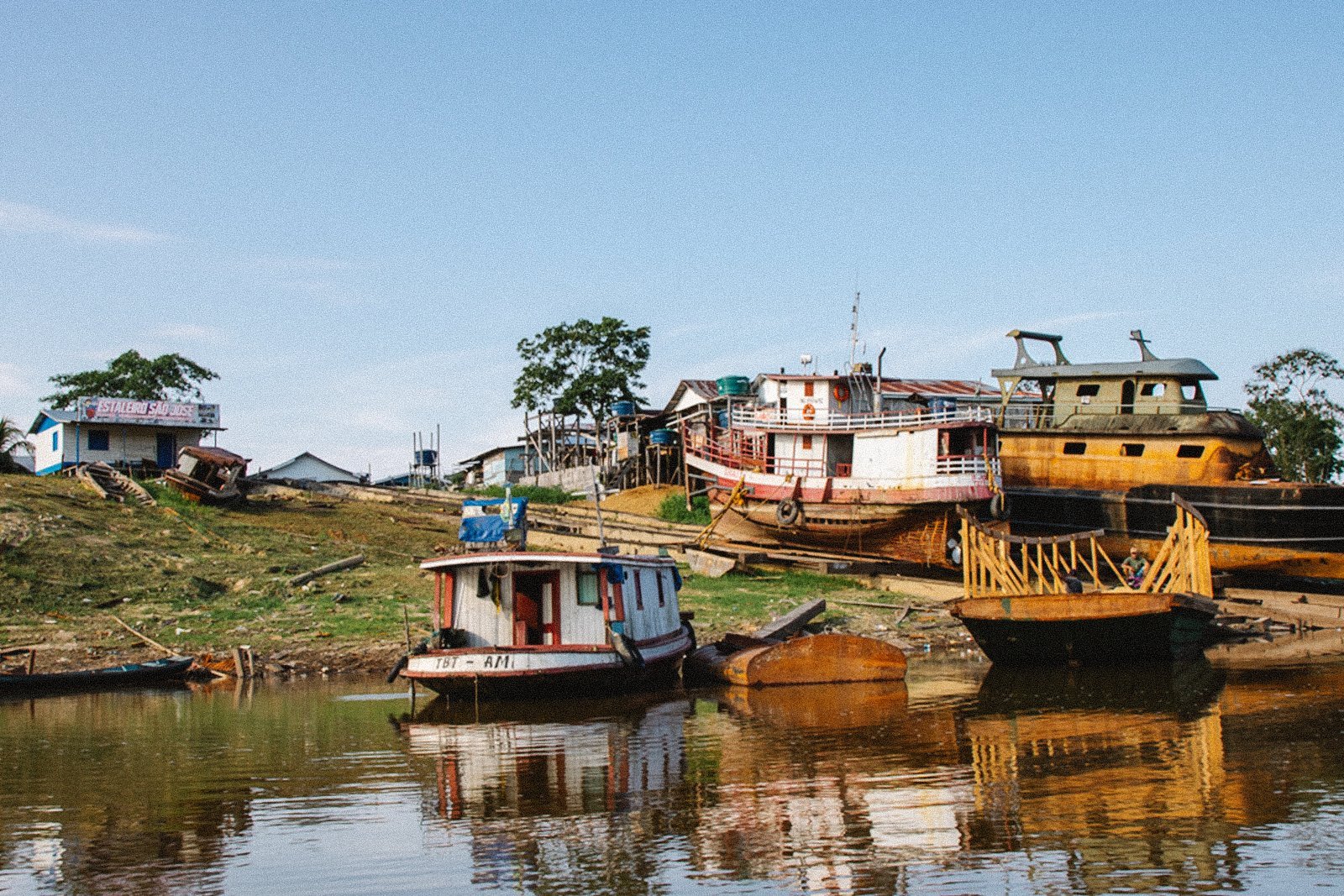
A couple of days earlier, Lucila Dos Santos—Jimmy’s mother, a lively 74-year-old woman who has spent more than six decades chasing ornamental fish across the Amazon—had invited me to join her son on an outing. In recent weeks, fishers from Brazil, Peru, and Colombia had passed through the Leticia Aquarium with supposed insider information about ornamental-fish hotspots. A Peruvian, for instance, had mentioned a creek on the border between his country and Brazil, apparently full of otocinclus. It was only about two hours away, which meant low fuel costs, fewer provisions to buy, and less stress on the fish during the return trip.
It sounded like an unbeatable opportunity, but there were two problems, Lucila told me. First, the fisherman wasn’t entirely sure the fish were actually otocinclus. She had described them to him, but because the Peruvian had no cellphone, he couldn’t send her a photo to confirm their identity. Second, the creek was on the Yavarí River, a tributary of the Amazon that runs through Peru and Brazil, where pirates routinely attack and detain boats attempting to move the many drug shipments that increasingly drive the region’s economy. In recent years, the thieves have expanded from drugs to motors, money, food, drinks, and merchandise. Once, they not only took 18,000 reais (about USD 3,350) from Jimmy but also nearly a thousand ornamental fish he was bringing back to Leticia.
Other leads came with similar risks. The best option—the safest, according to the Dos Santos family—was Amador’s, the Yagua elder from La Libertad, an Indigenous reserve halfway to Puerto Nariño, the second most important municipality in the Amazonas department. Lucila had known Amador for more than thirty years. She had fished with him and done business with him. She trusted his judgment more than anyone else’s. And the place was roughly three hours upriver—slightly farther than the creek on the Yavarí, but still entirely within Colombian territory and, in principle, far from pirates.
In the end, Lucila made the call and, shortly after nine in the morning on September 2, Jimmy, Preto, and I were heading toward Puerto Nariño with a jerrycan of gasoline, four kilos of fariña, and food for several days. On both sides of the river, medical-mission boats, massive barges carrying timber or fuel, and floating rafts or houseboats drifted by, where children played and small chestnut- and brown-colored dogs barked. As we advanced, the sound of the peque pequebounced off the banks, echoing like a chainsaw.
The canoe belonged to Preto’s brother. Jimmy had lent his own— “the big boat,” he called it—to some fisherman friends from the Orinoquía. They were supposed to have returned the previous afternoon but hadn’t shown up. We would have to spend the entire expedition, days and nights alike, in the smaller canoe, and then figure out how to transport twenty, thirty, or fifty thousand otocinclus in improvised tanks between the benches. We would manage somehow, Jimmy said, because it would be worth it: exporters were paying between 200 and 250 pesos for each tiny, projectile-shaped catfish. In the worst-case scenario, that meant between four and five million pesos (USD 1,000 to 1,250), far more than they had been making recently in a single outing, and enough to get through another month. Living off ornamental fishing was becoming harder by the day; Lucila had told me before we parted. Some months, they had had to borrow money just to buy food. It would be a couple of long, uncomfortable days, Jimmy said, but yes, of course—certainly—it would be worth it.
Species exports 2020–2024
Each bar shows the annual total of exported species. Select a year to see its change and the composition of the ten most exported species.
Fish are the most exploited animals on the planet. More than half of all vertebrates traded globally belong to this group. According to a recent study based on data from the UN’s Food and Agriculture Organization (FAO), between 2000 and 2019, between 1.1 and 2.2 trillion fish were caught each year. That figure does not include bycatch, recreational fishing (estimated at 47 billion fish annually) ghost fishing, which occurs when gear is lost, abandoned, or left adrift, or simply what goes unreported, such as illegal fishing or the capture of bait fish. At its upper range, the number represents more than a thousand times the annual number of chickens or cattle we slaughter worldwide. If we assume each fish measures about ten centimeters on average, the total catch from those two decades, laid out head to tail, would cover the distance from Earth to Pluto.
Most of that haul—roughly 56%—is destined to produce fishmeal and fish oil, which are then used primarily in feed for livestock, poultry, pigs, other domesticated animals, and farmed fish. In other words, we fish largely to feed the fish and animals we later eat. Much of what is not used as food for our food is eaten by us directly. The FAO estimates that annual per capita fish consumption is about 20.7 kilograms, more than three kilograms above poultry, the world’s most consumed meat, and above pork and beef (the FAO does not include fish in its meat consumption statistics). We are more piscivorous than carnivorous, though for some reason this is rarely acknowledged.
Compared with food fisheries, the ornamental trade is small and, in principle, more sustainable. People like Jimmy and Preto usually release unsold fish back into the river—transporting them takes up space and fouls the water in which the commercially valuable ones must be carried. Even so, the volumes involved are enormous. It is estimated that around 2 billion ornamental fish from nearly 6,500 species are traded each year. This means that nearly 20% of all fish species recorded on Earth are currently sold for decorative purposes.
We rarely see them in public, since aquariums tend to be tucked away in living rooms or children’s bedrooms, but as journalist Emily Voigt notes in The Dragon Behind the Glass: A True Story of Power, Obsession, and the World’s Most Coveted Fish, fish are the most common pets in the United States. There are roughly 160 millions of them—nearly one fish for every two people—spread across 3.9 million households. Altogether, they number about as many as all the nation’s dogs and cats combined. The global aquarium industry may be worth as much as USD 30 billion, nearly one and a half times the gross domestic product of a country like Nicaragua. (As with other pets, most spending goes to accessories.)
Fish from both seas and rivers feed into this global current. Nearly all marine ornamentals are collected from reefs. About 90% of freshwater ornamentals, by contrast, are bred and raised in massive facilities in Southeast Asia and a handful of European countries. Many of the species bred there originate in rivers elsewhere. As happened with plants and the pharmaceutical trade, travelers collected endemic fish species from the Global South and learned to exploit them. In some ways, this benefited local populations, since fewer were taken from their ecosystems, but it also disrupted the market and undercut fishers who relied on this activity.
Today, ornamental fishing survives in Colombia’s Orinoquía and Amazon regions thanks to the 10% that is not produced in hatcheries. This portion includes newly discovered species, species that have not yet been bred successfully in captivity, and those that collectors prize for being wild caught.
Within that same group swims the criminal trade. In the Amazon, wild-caught ornamental fish make up the majority of wildlife trafficking, according to data gathered by the project Autopistas de depredación. Most seizures occur in Brazil, where between 2010 and 2025 millions of these animals were confiscated, according to the Brazilian Institute of the Environment and Renewable Natural Resources (IBAMA). By contrast, seizures in Colombia are rare. Between 2020 and 2025, authorities at Bogotá’s El Dorado airport intercepted only 11 shipments containing just over 1,200 fish. These numbers, however, obscure the reality of the trade, according to Armando Ortega Lara, a 53-year-old marine biologist who has spent more than two-thirds of his life studying Colombian rivers.
Virtually all ornamental fish exported from Colombia originate in another country, says Ortega Lara, author of the two main books on ornamental fish published in Colombia. In Leticia, more than 90% of the fish received by middlemen come from Brazil or Peru. A similar pattern occurs in the Orinoquía with Venezuela, according to several people familiar with the trade. This flow of animals is technically illegal. Each country requires special permits for commercial fishing, and it is exceedingly rare for a foreign fisher to be granted one. Nevertheless, due to weak enforcement, fishers catch wherever it is convenient—regardless of national borders.
In brief, ornamental-fish exploitation in a country like Colombia works as follows: fishers in regions such as the Amazon and Orinoquía capture animals in neighboring countries and sell them to local middlemen, who usually operate holding facilities or warehouses. Once these middlemen accumulate enough fish to justify the cost of air freight, they send them to Bogotá, where exporters receive and inspect them. When exporters have gathered a sufficient volume, they ship them by air to buyers in Asia, the United States, and Europe, who in turn sell them to pet stores, aquariums, and collectors. It is no exaggeration to say that nearly the entire Colombian ornamental industry rests on the legalization of smuggling and wildlife trafficking.
Beyond this “laundering” or “whitening” of animals, some actors exploit the lack of oversight, the sheer volume, and authorities’ limited knowledge to move prohibited species or underreport the numbers they export. Colombia’s Aquaculture and Fisheries Authority (AUNAP), the agency responsible for regulating fisheries, is theoretically required to review ornamental-fish exports. In practice, this seldom happens, according to an employee who spoke on condition of anonymity. Only 5% to 10% of the boxes in each shipment are inspected, and only about half of all shipments are examined at all, they said.
When inspections do happen, officials need extensive taxonomic knowledge to correctly identify species, and they require a great deal of time to verify that reported quantities match what is being shipped. Both conditions are often lacking. As a result, seizures are infrequent. Only in very rare cases are shipments stopped or sanctions imposed, as data from Bogotá’s Environmental Secretariat show. (In July 2021, for instance, more than 200 zebra plecos(Hypancistrus zebra), a black-and-white catfish endemic to Brazil’s Xingu River and one of the most trafficked fish in the country, with prices ranging from USD 145 to USD 1,300)
Nearly all shipments leave without incident. Between 2010 and 2025, more than 360 million fish worth nearly USD 140 million were exported, according to data obtained from the National Directorate of Taxes and Customs via a freedom-of-information request. Among the species bound for Asia, Europe, and the United States are arawanas or “dragon fish,” as they are known in Asia, relatives of the pirarucú (Arapaima gigas) belonging to the family Osteoglossidae (from the Greek osteo, “bone,” and gloss, “tongue”), with large silver or bluish scales, oblong bodies that can exceed one meter in length, and pronounced lower jaws that make them look perpetually displeased; several species of discus fish, round-bodied species in cream or orange hues with black stripes or aquamarine spots, belonging to the genus Symphysodon; a wide variety of corydoras—named for their genus, Corydoras—catfish with barbels or “whiskers” that help them forage for food or detect danger on the river bottom; and tiny multicolored or iridescent fish such as cardinals (Paracheirodon axelrodi) and neons (Paracheirodon innesi).
And, of course, the otocinclus.
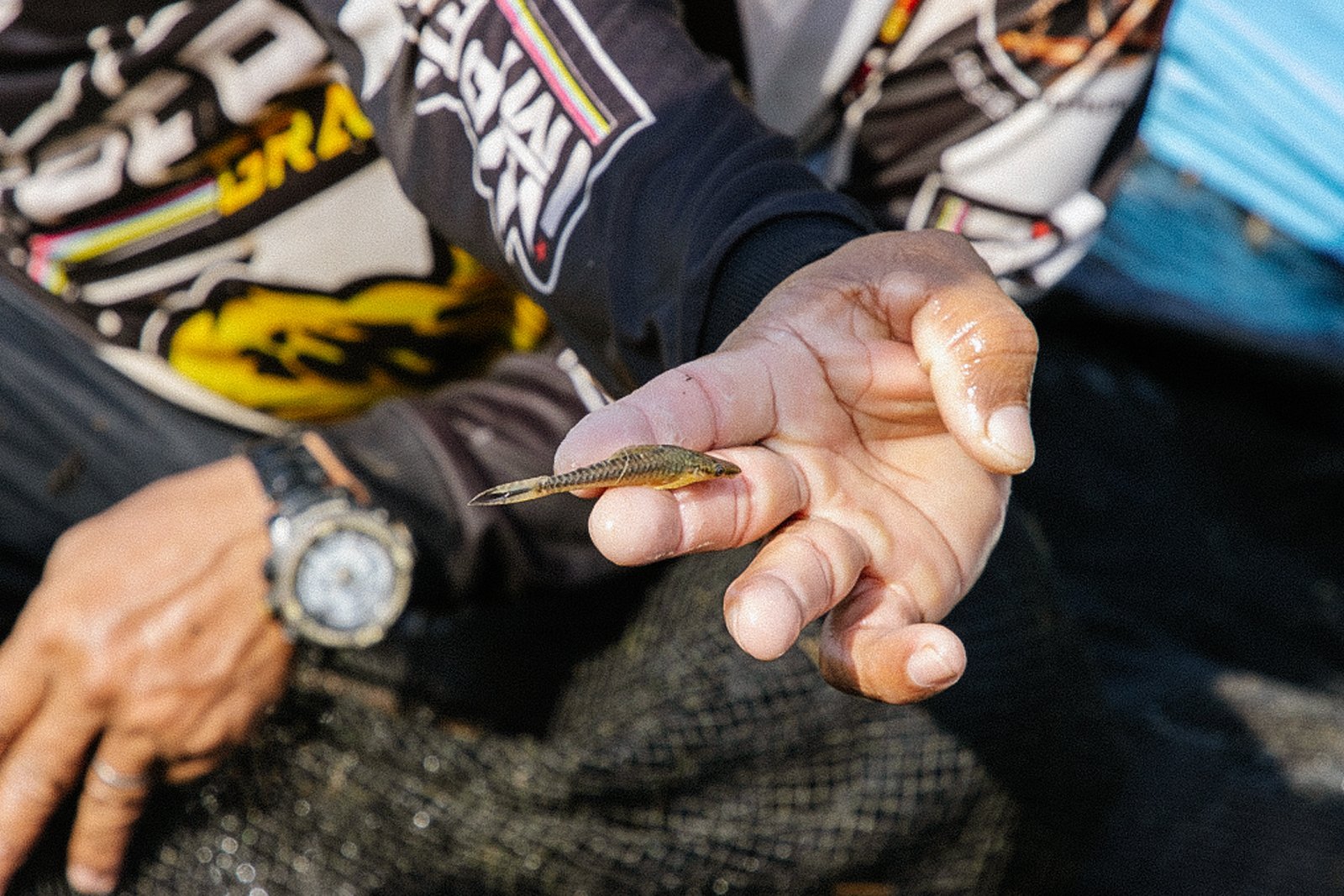
—No, no—wait, there’s no signal.
At the bow of the small boat, Jimmy stood and motioned for Preto to steer toward the right bank of the Amazon. It was nearly eleven in the morning, and we were approaching La Libertad when Jimmy received a call from the Peruvian fisherman on the Yavarí. Even though we had headed in the opposite direction—Amador’s suggestion was the safer route—Lucila wanted to confirm whether the fish the Peruvian had spotted were indeed otocinclus.
The call was brief. The fisherman would soon arrive in Leticia, Jimmy said after hanging up. If luck was on their side, they could catch nearly a hundred thousand catfish in just a couple of weeks, he added with a grin before telling Preto to speed up.
We navigated close to the riverbank. “When you’re going upriver, it’s better to avoid the center; the current is stronger there,” Preto explained in Portuñol. “Downriver, on the other hand, it’s best to stay away from the edges and ride the flow—it gives you a little extra push.” The goal, in the end, was to save fuel. A gallon in Leticia costs almost five dollars, and every extra milliliter eats into the already slim profits.
The thunderous buzz of the peque peque echoed across pastures and yarumo trees—Cecropias with broad leaves shaped like battered umbrellas—the last barrier before the forest. Fishermen cast white and turquoise throw nets or hauled in nets whose floats were made from plastic bottles. Nearby, two pink dolphins briefly surfaced. I pointed at them excitedly, but Preto didn’t react. Every now and then, a few fish leapt alongside the canoe.
There are at least 2,400 fish species in the Amazon, more than ten times those found in the Nile and three times those in the Mediterranean. Every year, scientists discover more in the river’s quiet backwaters and hidden bends, suggesting there may be at least 3,000 species in total—roughly 8% of all species on the planet. Despite this diversity, we know very little about the behavior and general traits of most, according to marine biologists, aquaculturists, and ichthyologists.
In truth, almost no one studies river fish—or fish in general. The species we do know are mostly those we catch—for food, ornament, or sport. Few people devote attention to the aquatic lives of fish that don’t fit into those categories. Partly, this is because, to most, they are the least charismatic vertebrates. As ichthyologist Brian Curtis writes in The Life Story of the Fish, we hold biases against them because of their appearance. “The face of a fish is one of its most obviously inferior features,” he notes. Although it was the first face on the planet, we struggle to observe it without some mockery or hesitation. Its angular shape is unlike ours, and it lacks eyelids or muscles to mimic the facial expressions typical of mammals. Its face “cannot frown or smile,” Curtis adds. If it could, it would likely receive more sympathy.
Their ancient lineage doesn’t help, either, as British ethologist Jonathan Balcombe points out in the now-classic What a Fish Knows: The Inner Lives of Our Underwater Cousins. Fish are Earth’s oldest vertebrates. The earliest fossils date to the early Cambrian, nearly 200 million years before the first dinosaurs appeared and around 450 million years before any primate walked the Earth. We tend to view them as “archaic” or “primitive,” aquatic remnants that never escaped the water to become “evolved” mammals like us.
But natural selection is not about creating “better” species or “more advanced” beings. Their ancient lineage is proof of their adaptability and evolutionary success. In terms of species diversity or sheer numbers, they far outclass us. There are at least 36,000 fish species, more than five times the number of mammals. We lack precise data on total individuals, but in terms of biomass, a 2021 study estimated the ocean’s fish at 10.9 trillion kilograms, nearly ten times that of all terrestrial mammals combined.
Freshwater fish have no such estimates. They seem to inhabit another world, even more removed from us than the heights where birds soar, the swamps where snakes coil, or the ocean depths where Lophiiformes lurk with their terrifying jaws and luminescent fin rays—species more likely to capture public fascination. Except for aquarists and a handful of biologists, few people can identify a freshwater fish they don’t eat. The billions flowing through the world’s rivers, supporting thousands of ecosystems, are like ghosts in a forgotten town: present, but unseen.
Suddenly, a fish shot out of the tapir-colored water and struck my face as I stared absentmindedly at the river. It was an unmissable, rude gesture. I shook my head, wiped my cheek, and glanced at Preto, expecting a mocking laugh. He remained impassive, maneuvering the peque peque. The fish—silver flashes catching the sun—floundered frantically in the puddles inside the canoe. Since Preto didn’t seem to care, I twisted on the bench and, after several attempts, managed to grab it and toss it back into the river.
Soon, Jimmy pointed toward a small settlement on the right bank. Two barges rested on a patch of dry mud where grass crept toward the shore. About thirty meters away, a fallen tree lay in front of a green-and-red house with a zinc roof. A path led inland to other wooden homes, several antennas—there was internet access, courtesy of the Ministry of Information and Communication Technologies—and the cone-roofed maloca of La Libertad. Jimmy and Preto grabbed their bags and covered the rest of the gear with a black plastic sheet before heading to the village.
A group of Indigenous people greeted us briefly along the path. Inside the maloca, a woman informed us that Grandfather Amador was working in the chacra and would return shortly. While we waited, Preto bought four fish for just over a dollar and had them prepared for lunch.
Amador appeared around one in the afternoon. He was about 1.60 meters tall and wore royal-blue shorts and a dark blue short-sleeved shirt. Deep furrows on his forehead held beads of sweat. “I wasn’t expecting you today,” he said. Jimmy approached, greeted him warmly, and showed him a photo of the fish. Amador nodded. We followed him to his home and shared fish soup with his family. Then we returned to the boat. His grandson joined us, so the five of us squeezed onto three benches. Jimmy pushed the canoe into the current, and Amador pointed north. “The pool is over there,” his grandson said from the bow.
We spent nearly an hour circling in search of the otocinclus’ hiding spot. In recent days, the river had dropped several centimeters, exposing new beaches and islands. The landscape had changed, the grandson noted. We entered a side channel until we ran aground. Amador pointed toward an opening beyond a wall of yarumo trees. We left the canoe on the sand and walked half an hour through tall grass and thorny cane. Preto and Jimmy cleared the way with machetes. “Even if we find the pool, I doubt we’ll be able to get the fish out,” Jimmy said. Carrying them in bags for thirty to forty-five minutes under the morning sun would kill the fish—and exhaust us too. He lowered his head and quickened his pace.
We gave up at a cracked, nearly dried-up creek. Jimmy thanked Amador for his time and called his mother while the grandson scanned the horizon with disappointment. “There’s good news and bad news,” Jimmy said. The Peruvian fisherman had arrived, and Lucila had shown him photos of the otocinclus. It was a different species—one with no market value. However, the fisherman knew of a stream near the Yavarí where another fish sought by exporters could be found. It was Corydoras melanotaenia, a cory with metallic green scales and golden barbels that American aquarists affectionately call the green-gold Cory. Exporters paid 400,000 pesos—about 100 dollars—per thousand. Another similar species with a longer snout— “trompuda, the long-nose one,” Jimmy said—could fetch slightly more. They weren’t otocinclus, but a good haul would earn enough to cover some urgently needed expenses.
“We’ll return to Leticia immediately,” Jimmy said, “and head for Benjamin Constant in Brazil as soon as the big boat arrives. The fishing will take place on the Yavarí.”
Flows from Colombia to the main destinations
Each line shows cumulative exports from Colombia to each destination.
Humans have been raising fish in ponds for at least 4,500 years. In Egypt and Mesopotamia, texts, paintings, and tomb reliefs depict stone reservoirs teeming with fish for consumption. Aquaculture—the controlled cultivation of freshwater or saltwater animals—is even older: in China, around the same time chickens were being domesticated, some 8,000 years ago, carp were already being bred in captivity among rice paddies.
The decorative use of fish also has a long history. In Rome, over two thousand years ago, the elite maintained not only cisterns with edible fish for banquets, but also marble or rock ponds along the seashore stocked with catfish (Galeichthys feliceps), eels (Anguilla), and moray eels (Muraena). Beyond the ornamental aspect and the affection some people had for their fish—Pliny recounts that the politician and orator Quintus Hortensius Hortalus wept at the death of his favorite moray—the piscinae, as these ponds were called, became a symbol of social status and eventual decline, due to the absurd costs of constructing the infrastructure and maintaining the fish. Contemporary accounts mention that the mother of Emperor Claudius would adorn her favorite eels or morays with earrings and necklaces. The great Roman orator Cicero mocked the wealthy, calling them piscinarii and “Tritons of the ponds.” In his writings, ornamental fish were a clear sign of decadence. “They are so foolish. Even though the Republic is lost, they expect their fishponds to remain safe,” he wrote. His prediction was more or less accurate: the piscinae with their gold-adorned creatures vanished not with the Republic, but with the fall of the Empire.
Centuries later, ornamental fish breeding reemerged on another continent. During the Jin Dynasty in China, between the late 3rd and mid-5th centuries, fishermen began selectively breeding carp (Carassius carassius), a freshwater species in the Cyprinidae family, which sometimes displayed scarlet, orange, or gold highlights on their grayish scales. From this careful selection, the goldfish (Carassius auratus) was born.
Over time, as in Rome, fish became a luxury emblem and a form of display. Between the 10th and 13th centuries, the imperial family of the Song Dynasty adopted the yellow goldfish as a symbol of their house and prohibited ordinary people from keeping or breeding them. They were displayed in porcelain bowls, vases, or ponds in the imperial gardens. Part of their appeal was linguistic: the Chinese character for fish 鱼 (yú) is pronounced the same as the character for abundance or surplus, 余 (yú). For this reason, goldfish (jin yú) were believed to represent not only wealth but also good luck and fortune. Additionally, their form and color were gradually enhanced by breeders, producing crimson, ivory, and fiery hues, brighter scales, and larger heads, eyes, and tails.
The fascination with fish in bowls reached Japan and Korea by the 17th century. The Japanese refined the practice, selecting carp that had adapted to spending most of the year in cold, dark conditions. The result was a fish measuring 30 to 90 cm with coral and black patterns on snowy scales, called nishikigoi, or koi for short.
Merchants and travelers brought the guppies to Europe around the same time they arrived in Japan. However, their popularity in Europe only took off in the mid-19th century, after the invention of the aquarium. In 1832, Jeanne Villepreux-Power, a French naturalist and marine biologist studying mollusks in Sicily, designed three types of glass tanks to observe the behavior of marine animals. The aquarium craze quickly spread to the public. In early Victorian times, as European empires expanded and fascination with the “exotic” grew, it was common to see fish, anemones, and other aquatic creatures swimming behind glass walls in wealthy households.
Interest waned around 1860 but surged again after World War II, fueled by the rise of the American middle class. Suddenly, millions of people wanted their own underwater world to admire. Aquarium owners cite three main reasons for keeping fish: watching them swim is relaxing (studies show that exposure to aquariums reduces stress and anxiety, even before dental surgery); they enjoy creating and maintaining an environment where their animals thrive (a subculture known as aquascaping has developed around this); and they admire the shapes and behaviors of the species they care for. Finally, there are collectors, seeking the rarest or most unusual specimens, whether to boast or for a personal drive that is hard to define.
Demand from enthusiasts led explorers like the American Herbert Richard Axelrod, the German Heiko Bleher, and the Japanese Shigezo Kamihata to scour river basins in Asia, Africa, and South America for new aquarium species—over a thousand discoveries between them. They were chasing the next guppies: fish whose shape or color would make them indispensable for aquariums worldwide. And they were willing to pay anything to find them.
By the mid-20th century, the global fascination with fish became a surprising source of income for communities in places like Leticia. Suddenly, people on the other side of the world were willing to pay fortunes for animals that fishermen had previously discarded or ignored, since they were considered poor or inedible food. In Southeast Asia, Brazil, Peru, and Colombia, families such as the Dos Santos found their calling.
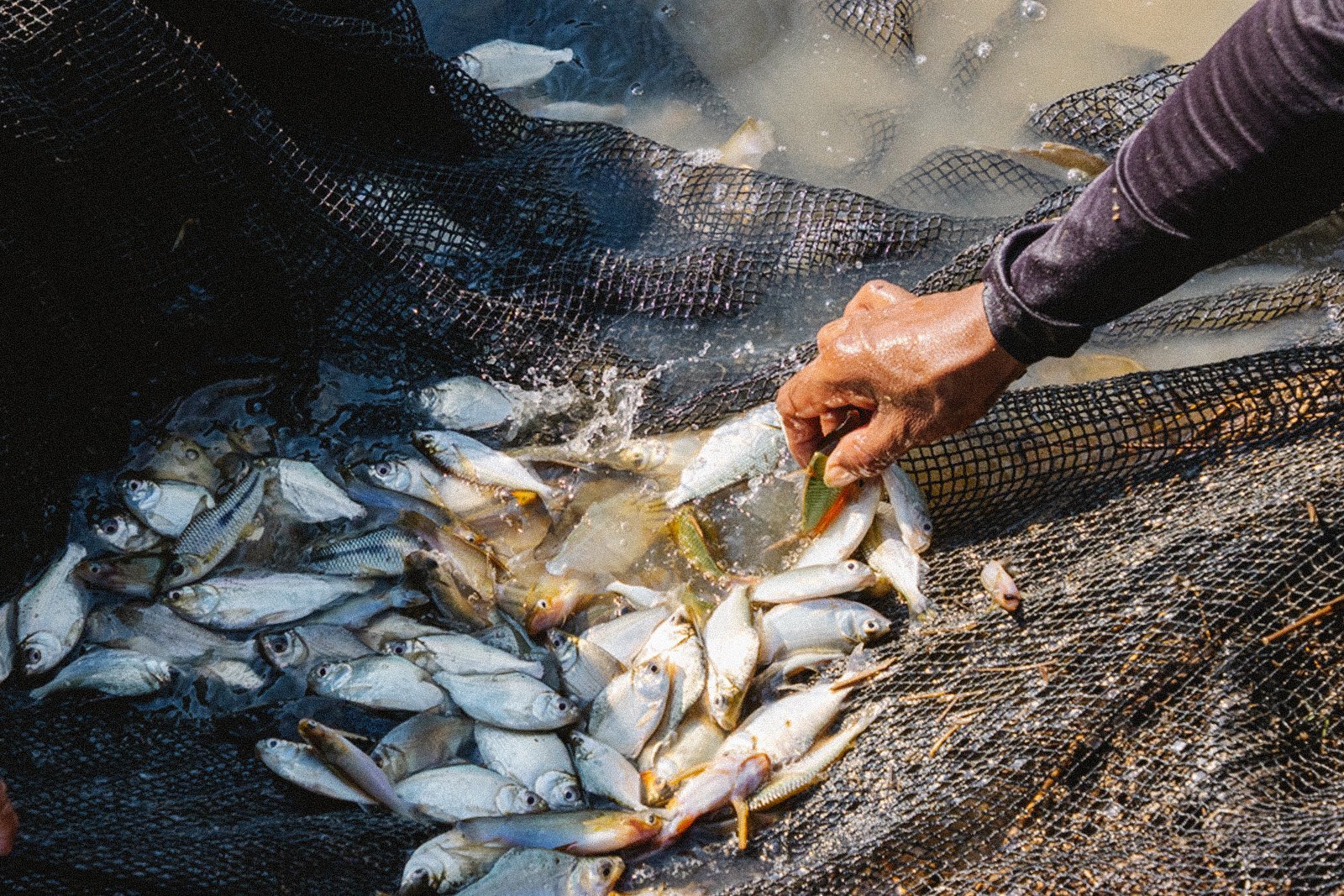
The large boat—a canoe without a canopy, about four meters longer and half a meter wider than the other—arrived in Leticia on September 4 around 10 a.m. At the Leticia Aquarium, a floating house now grounded on land, Lucila and two of her children managed both a business hub and their home. Jimmy and Preto went out to help the Orinoco fishermen unload their catches. In pools between the benches, Jimmy’s friends carried hundreds of tigritos (Pimelodus pictus), whitish catfish of nearly 10 cm, dotted with round black spots (leoparditos would have been a better name). Lucila watched from the second-floor window, where she had spent the morning reflecting on her family’s history.
Lucila’s grandfather, Antonio Dos Santos, was Brazilian, and his wife, Justa Pérez, was Colombian. The couple traveled constantly between Peru, Brazil, and Colombia, selling rubber and animal hides. During one of these trips, Norberto, Lucila’s father, was born. Eventually, the family settled in Mocagua, a Tikuna indigenous community not far from La Libertad. There, Norberto learned to hunt and fish. He was twelve when his father died, and to support the family, he had to rely on both skills, taking advantage of the booms in skins and feathers that swept through the Amazon at the time.
In 1953, after completing his military service, Norberto planned to return to Mocagua to make a living from subsistence fishing. Before he left, Captain Luis Alberto Sáenz Arévalo, a friend from the Army with contacts in the United States, asked him to catch some of the fish being requested abroad. The specimens impressed him so much that he abandoned the Army to start exporting fish with Norberto’s help.
The decision coincided with a series of changes in the Amazonas department that favored the new business. In 1954, a weekly flight between Bogotá and Leticia was established, and shipping costs were reduced. Before that year, air transport was irregular, making it nearly impossible to trade any live or perishable goods. With the new route, businesses like ornamental fish trading took off.
Norberto involved his wife and their twelve children in the work. Lucila, one of the eldest, went fishing for the first time at eight. They paddled toward a gramalote, a type of grass growing along the riverbank. While her father cut it, Lucila circled the area with a net. There, they caught abramites (Abramites hypselonotus), bicolor striped fish of 13 cm with amber tones (tigrito would have been a better name), which Norberto called the “200 pesos.” When they caught enough, he paid his children just enough to buy an ice cream or cross into Brazil to watch a soccer match.
Ornamental fish trading peaked in Colombia between 1960 and 1980. During that period, the country was South America’s leading exporter of fish (today it ranks third, after Brazil and Peru). For part of those years, Captain Sáenz chartered weekly flights to send fish to the United States. Foreigners like Mike Tsalikis, an American of Greek descent, did the same with their own planes, exporting fish, hides, and other fauna.
The cocaine boom contributed to the decline of ornamental fishing, according to Lucila. Many fishermen and exporters, including Tsalikis, switched to the new business without hesitation. Others discovered that ornamental fish were a convenient way to launder money, a practice that, according to at least three sources in Bogotá, still persists.
Lucila and her siblings used profits from fish trading to fund their children’s education. They carried out fishing trips along Colombian, Peruvian, and Brazilian stretches of the Amazon. They used varadores—shortcuts and little-known channels—to avoid increasing enforcement by local authorities. A network of contacts and fishermen alerted them to where the species in demand could be found. The international market kept expanding. The global value, around $21.5 million in 1976, had multiplied nearly fifteenfold by 2007, reaching $315 million.
“The best years are gone,” Lucila said, watching the canoe from her window. Since the 2010s, they’ve lost several boats and motors to Brazilian authorities and pirates. Security is a major concern. National and foreign criminal groups increasingly control businesses and territories along the triple border. Fishermen receive little support from AUNAP or any other authority.
Jimmy went upstairs to let us know everything was ready. On the way to the boat, we saw another fish collector at the neighboring house preparing a shipment of more than thirty plastic bags filled with thousands of ornamentals. A group of Peruvian buyers observed the process. Jimmy waved from afar before boarding the new canoe, which also relied on a peque peque. He took a seat near Preto on a bench and asked me to move to the bow. The saw-like roar of the peque peque lulled me as the boat set off toward the Brazilian border.
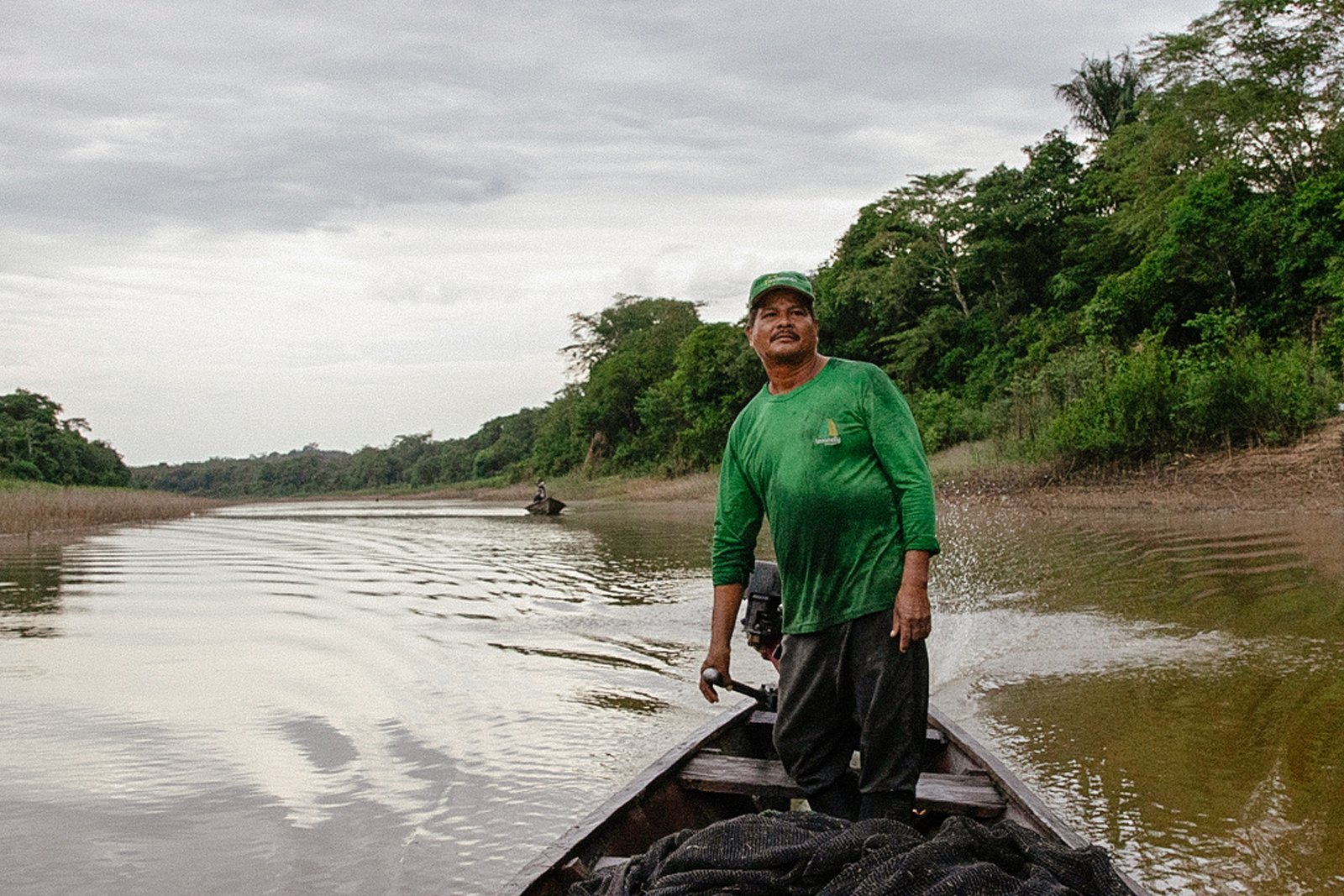
We spent nearly half a day looking for Denis Alvarado Rodríguez, the Peruvian fisherman from the Yavarí. He wasn’t at his floating house when we passed by, so we kept circling through Benjamin Constant—a Brazilian town on the Yavarí, partly controlled by organized crime and known for one of the Amazon’s largest cocaine seizures—until dusk.
Denis, a stocky 54-year-old with a thick, dark mustache, returned to his river home as night settled in. “I was expecting you tomorrow,” he told Jimmy by way of greeting, swinging open doors and windows as he spoke. Two dogs raced along the planks encircling the main structure, barking with excitement. Near the kitchen, a parrot mumbled something.
It was too late to head out, Denis announced once we had set down our bags. The creek where the corredoras trompudas lived wasn’t far, but it would be better to go at daybreak and make use of the night afterward. Besides, it would give us time to rest and try the fish soup his wife was preparing. We thanked him and settled into the living room. The silhouettes of canoes and boats drifted across the window, framed by the river’s fiery dusk. Jimmy, Preto, and Denis swapped stories from past fishing trips. One word kept surfacing: arawana.
Every ornamental fisherman in the region speaks wistfully of the glory days of discus and arawanas—the fish that generated the greatest profits in the history of the Amazon’s aquarium trade. Silver arawanas (Osteoglossum bicirrhosum) and blue arawanas (Osteoglossum ferreirai), both from the Osteoglossum genus, were for decades the main source of income for families like the Dos Santos. Most were exported to China, where an entire cult surrounds the genus, prompting collectors to pay more than 150,000 dollars for specimens of other species, as journalist Emily Voigt has reported. In China and Japan, they are regarded as talismans of luck and magnets of abundance. Like koi, some of these fish are treated the way others treat thoroughbreds or show dogs. At Aquamania and Aquarama, two of the world’s premier aquarium-trade events, the rarest arawanas have round-the-clock security. Some even undergo cosmetic surgery to better conform to competition standards.
In the 1990s, small planes landed in Tarapacá and Puerto Nariño for the sole purpose of flying out arawanas.International buyers paid thousands of dollars upfront to secure the catch, Lucila told me. At times, it was profitable to travel down to Brazil, buy a boat, fish for days, and bring the haul back to Colombia. A good trip could bring in 20 million pesos, around five thousand dollars or more. That all ended with the pandemic. Fearing zoonotic diseases, China—the main buyer—closed its doors to Colombian arawanas and other wildlife harvested from the wild.
Fishermen still trade stories about the best grounds, the rarest specimens, and the morphs most coveted by collectors. Jimmy, for instance, once caught three albino arawanas. What he earned from that catch, he said, funded two months of living—and celebrating—in Peru. One night, Preto landed 14,000 silver arawanas in just a few casts, enough to buy engines, appliances, and liquor. Denis had similar successes decades earlier, often fishing alongside Lucila.
Most arawanas were caught outside Colombia. This holds true for these species and for many others. Fishermen in the tri-border region take advantage of closed seasons and regulatory gaps to maximize their earnings. In Brazil, arawanafishing is banned outright. In Peru and Colombia, silver arawanas fall under seasonal restrictions—but on different calendars: in Peru, they’re off-limits from December 1 to March 15; in Colombia, the ban runs from September 1 to November 15. During the boom years, this meant one could fish arawanas year-round simply by crossing borders.
In Amazonian River communities, few people take national boundaries seriously. Life is so interwoven that it forms a kind of cultural patchwork. As Jimmy and Preto prepared the large boat for the trip to the Yavarí, for example, Eric—another of Lucila’s sons—watched a Portuguese-language movie on the living-room television. On the wall hung a woven textile depicting llamas, condors, and scenes of Machu Picchu, facing a hammock emblazoned with Flamengo’s crest. “We treat each other as if we were one nation,” Lucila had told me.
The trade, however, emerged before current environmental protections, and few have adapted to new regulations. Ornamental fishing still operates much as it did fifty years ago, marine biologist Ortega Lara said. Without government support, he added, it would likely collapse, so there are few real incentives for change.
Just before dinner at Denis’s house, Jimmy pulled out a book with photographs of all the ornamental species found in Colombia and showed it to the Peruvian fisherman. He pointed out several species that exporters were requesting. Denis nodded, asking questions about colors and shapes. When he wasn’t fishing, he told me, he made a living sawing timber. Later, after we ate fish, rice, and fariña, we used some of the gasoline to fire up the generator and watch a match of the Brazilian national team. Jimmy set an alarm to wake us before dawn. A rooster crowed through the entire night.
Three explosions cracked across the sky over Benjamin Constant the next morning. Dawn was only beginning to break, but people were already setting off firecrackers to celebrate Amazon Day. Still half-asleep, we turned toward the Yavarisinho, a narrow creek beside the town. We traveled in two boats: Jimmy and Preto followed behind in the larger one, while Denis and I headed out first in a smaller canoe. On both banks, vultures picked through plastic, Styrofoam, wrappers, roof tiles, and all manner of trash.
Ten minutes out from the port, a silence wrapped around us. A kingfisher rocked on a branch, eyeing the mahogany-colored water. Hundreds of ripples appeared and fanned out across the surface of the creek. Corredoras, Jimmy said as he passed us. “You can see a bit of the green.” I narrowed my eyes and nodded, though I couldn’t distinguish anything. It looked like a dry drizzle.
Denis dropped me off on the bank with the canoe and climbed onto the larger boat to help Jimmy and Preto. Together they lifted the arrastrón, a 25-meter black seine with one-centimeter mesh. Jimmy grabbed one end and jumped into the water while Denis held the other from the boat. Slowly, Preto maneuvered the vessel, so the seine encircled a section of the creek where the ripples were densest. Once he completed the semicircle, he used an oar to pin one end of the net to the shoreline and drag it toward firm ground.
Standing in the water, the three men hauled the black mesh in. When the net finally surfaced, they crouched. Thousands of fish writhed, trapped in its squares. They came in shapes like coins, needles, projectiles, pencils, and tiny galleons. There was gold, silver, mother-of-pearl, metallic green, cream, blood red, cyan, and flame: a kaleidoscope lighting up in the sun. (“Water light, water fish; the aura, the agate, / its luminous overflow; Tracking fire the shy elk—Between the ceiba, between the shoal; pulsing flame,” writes the Mexican poet Coral Bracho.)
Lifting sections of the net above the water, Jimmy, Preto, and Denis began sorting the fish worth keeping. They handled common angelfish, redhooks, and the green corredoras that had brought us to the Yavarisinho, placing them gently into Styrofoam coolers and plastic containers filled with river water. Some species are more delicate than others, Jimmy told me. Angelfish shouldn’t be handled much, because they have a protective mucous layer that, if disturbed, can kill them. The same is true for otocinclus, needlefish, arawanas, araríes, and tetras. Green corredoras, on the other hand, can withstand handling—most of that genus is sturdy, Jimmy said.
Fish they didn’t need were tossed over the shoulder back into the river. Most were ten-centimeter-long fish with sharp spines, known locally as bocones or aceitosos. Larger ones were thrown onto the beach—the designated place for what would become our lunch. There were tiger catfish, piranhas, and several species with Portuguese common names. They were good grilled or in broth, according to Denis.
Flies, horseflies, and butterflies circled around us. The work was slow, because many fish, perhaps out of reflex or defense, clamped their fins and held fast to the mesh. The fishermen often had to break spines and fins to free them. In any case, they tossed them back into the river. On the beach, I approached the fish destined for our meal. A tucunaré(Cichla ocellaris), a carnivorous fish with bright red flashes and an owl-like eyespot on its tail that reminded me of certain butterflies, gasped in the mud among aceitosos and catfish. Not knowing what else to do, I filmed it for a while. Then, while Jimmy, Preto, and Denis sorted through the catch, I quietly returned several fish to the water, the ones I felt we wouldn’t need. I felt guilty about taking food from my companions, but watching the fish suffocate was hard. Thearrastrón offered no fair struggle. Many species move in large schools as a way of avoiding or protecting themselves from predators. A seine like the arrastrón exploits that survival strategy, scooping entire schools and everything stirred up on the riverbed. It is an artisanal—and microscopic, in scale and impact—version of the trawl nets used at sea. “I, a horror made of fingers and sun, for him / made him die,” wrote D. H. Lawrence in his 1923 poem Fish. Today the horror has no light and is made of nylon and polyethylene.
After a while, I walked back over to the fishermen. Angelfish, trompudas, bocones, bocones, angelfish, bocones, false redhooks, aceitosos, cucha, green, green, bocón, bocón, corredora, catfish, bocón: Jimmy and Preto named each fish as they freed it. Nearby, in the water, I heard sounds like a parrot’s squawks and something like a dog’s whine. It took me a moment to realize the noises were coming from the corredoras and the bocones.
They cast the net again and repeated the process several times until the sun became unbearable. By around 10 a.m., we were back at Denis’s house. There, Jimmy transferred the fish to plastic containers in the shade, changed their water, and added a bit of salt to, as he put it, “help settle the mud.” The angelfish shimmered silver in the murky water. When he had finished, Jimmy walked over with a smile. We would fish through the night, he said, so we could return to Leticia with a good haul.
We often assume that fish are the dumbest and most absurd of vertebrates. In English, the term fish-brain is used to describe someone slow or with a poor memory. A popular myth says that guppies’ memories last only three second, but studies show otherwise: they can remember, for at least a year, the color of the button they need to press to get food. In general, we overlook the complexity of fish. We almost never see them outside our plates, and we tend to imagine them as mechanical creatures, closer to insects than to the cognitively flexible birds or mammals. They are often dismissed as second-tier vertebrates—a category apart—so some vegetarians who give up meat feel little guilt when eating fish.
This is a completely mistaken view, as Jonathan Balcombe explains in What a Fish Knows. Fish not only communicate acoustically using their jaws, swim bladders, bones, and even, in the case of herrings, their anuses, which they apparently use to convey messages, but they also use tools to solve problems, as fang blennies do when they use rocks to open clams. They can even outperform primates in certain experiments of decision-making and future planning. In one study, scientists placed a red plate and a blue plate with the same food. If the animal started with the red plate, the blue plate remained and it could eat from it as well. If the animal started with the blue plate, the red one was removed. Cleaner fish learned to choose correctly after just over forty repetitions, while chimpanzees took more than a hundred.
Some fish display extraordinary abilities that rival or surpass our own. Like cats, certain species have a tapetum lucidum, a reflective layer behind the retina that enhances night vision. Others perceive infrared or ultraviolet light. Some navigate thousands of kilometers using smell, and a few can detect the scent of their spawning waters at the equivalent of one millionth of an Olympic swimming pool. Fish recognize the faces of other members of their species, and even individuals. Salmon, like turtles, use the Earth’s magnetic field to guide their migrations. Electric eels generate electricity not just to hunt or defend themselves, but to communicate. In the oceans, some cleaner fish learn and pass down specific ways of interacting with the fish they “service”. Evidence also suggests that many fish enjoy playing in aquariums or in the wild, experience pain (a myth rooted in Cartesian thought), and even feel pleasure when leaping or “flying” out of the water for no apparent reason.
In Colombia, scientists and organizations studying freshwater fish are few. Research is expensive and logistically difficult, and institutions rarely fund it. Only fragments of knowledge exist.
For instance, the biomass of otocinclus is massive. They inhabit low-oxygen areas rich in decaying organic matter, which they feed on. Tiny torpedo-shaped catfish help break down this waste. Without them, oxygen levels would drop, likely favoring harmful bacteria or fungi. Arawanas, apex predators, show fascinating behaviors: males guard fertilized eggs and later carry their young in their mouths. They feed on fish but also hunt terrestrial prey. They calculate and compensate for the refraction of water when leaping to catch insects, small birds, or even bats. By controlling populations of other species, they help maintain ecosystem balance. River runners play a similar role, feeding on small insects and keeping the trophic chains in check. If these species disappeared, a cascading effect would likely ripple through the entire aquatic ecosystem, including the fish we eat.
Worldwide, aquarium organizations claim ornamental fishing has little impact on fish populations. Climate change, pollution, mining, and consumption fishing are seen as the main threats. This is true, but marine biologists like Ortega Lara warn that ornamental fishing adds extra stress to populations already struggling with these pressures. Fishermen must travel farther to find certain species, whether in Colombia’s Orinoquía or the Amazon.
Caught fish are not the only ones that die. Mortality rates during capture and transport are high, sometimes averaging 50–70% in Colombia, according to fishermen, collectors, exporters, and biologists. In Brazil, with stricter controls, the FAO reports about 30%. Considering the trade volumes, millions of fish die before reaching aquariums.
These deaths are largely the result of poor practices, according to Ortega Lara. Fish are still caught and transported in the same way as fifty years ago, despite the poor outcomes. Plastic bags, for example, are a major threat to the fish because they accumulate ammonia and slowly poison them. Excess oxygen is also harmful, as high concentrations can burn the animals. In other countries, mobile ponds and other improved methods are used to reduce mortality. The Piaba Project, located in the municipality of Barcelos on the banks of the Negro River in Brazil, follows the best available practices and achieves mortality rates below three to five percent, according to the FAO. There, the fishing of tetras and other ornamental fish—the term piaba in Portuguese refers to all of them—supports the local economy and contributes to conservation. As recounted by American journalist Sy Montgomery in Amazon Adventure: How Tiny Fish are Saving the World’s Largest Rainforest, the initiative has been largely successful thanks to the support of private zoos and aquariums in the United States, which have provided equipment, training, and scientific evaluations to ensure that the project follows the best path forward.
In Leticia, no such support exists. The Dos Santos family continues to work as they always have, but with greater challenges, according to Lucila.
They launched the arrastrón for the fifth time at ten o’clock at night. We had been on the Yavarisinho for almost five hours, filling tanks built between the benches of the larger boat with angelfish, green corredoras, and trompudas. The mosquitoes had little free space to bite us. A nearly full moon illuminated serious and tired faces.
There’s just a little bit,” said Preto, directing his headlamp toward the dark, oil-colored eyes in the net.
“I only see little angelfish,” added Denis.
Jimmy grunted. Night fishing had been a failure. For some reason, the promise of the morning had not been fulfilled. In the previous four casts, they had caught only a few green-gold Corys, unlike the early hours of the day. Things had not gone well. The light drizzle had stopped, and they struggled to find areas with corredoras. During the third attempt, a branch had gotten caught in the arrastrón, and almost all the fish had been lost. A lot of bocón and aceitosos came out, and the occasional angelfish, a species always desired but not highly valued. They would be lucky if they caught enough to last a week.
The beams from the fishermen’s headlamps swept across the net from one side to the other. From time to time, they cursed in Spanish or Portuguese as the spur of a bocón dug in and refused to release the net: “Malparido!,” “Filho da puta!,” “Nos vienen a joder!” Their patience for untangling the fish was growing thinner. They broke more fins than at the start. The buzz of mosquitoes drowned out the croaking of frogs and the sounds of fish struggling in the net and on the ground.
In the last casts, I helped with sorting, repeating the names I had heard: bocón, aceitosos, green runner, trompudo, angelfish, piranha, caiman killer, tucunaré, false hook. When I found unfamiliar species, I asked for their names or quietly returned them to the river.
Later, I tried to learn more about the ecology of the various species we had caught, but information was scarce.
In Colombia, scientists and organizations studying freshwater fish are few. Research is expensive and logistically difficult, and institutions rarely fund it. Only fragments of knowledge exist.
For instance, the biomass of otocinclus is massive. They inhabit low-oxygen areas rich in decaying organic matter, which they feed on. Tiny torpedo-shaped catfish help break down this waste. Without them, oxygen levels would drop, likely favoring harmful bacteria or fungi. Arawanas, apex predators, show fascinating behaviors: males guard fertilized eggs and later carry their young in their mouths. They feed on fish but also hunt terrestrial prey. They calculate and compensate for the refraction of water when leaping to catch insects, small birds, or even bats. By controlling populations of other species, they help maintain ecosystem balance. River runners play a similar role, feeding on small insects and keeping the trophic chains in check. If these species disappeared, a cascading effect would likely ripple through the entire aquatic ecosystem, including the fish we eat.
Worldwide, aquarium organizations claim ornamental fishing has little impact on fish populations. Climate change, pollution, mining, and consumption fishing are seen as the main threats. This is true, but marine biologists like Ortega Lara warn that ornamental fishing adds extra stress to populations already struggling with these pressures. Fishermen must travel farther to find certain species, whether in Colombia’s Orinoquía or the Amazon.
We finished arranging the fishes in the tanks on the large boat. The Yavarisinho was deserted by the time we returned to Denis’s house. Cicadas and other insects throbbed from the jungle interior.
We had a soup prepared with catfish and tacunarés and said goodbye to Denis and his family. Guided by the moon, we crossed the Yavarí without incident. Few boats were navigating that branch of the Amazon at that hour. A fine drizzle creating ripples in the fish pools accompanied us until we reached Leticia around two-thirty in the morning. Lucila was awake. She helped her son and Preto arrange the fish in wooden tanks on the first floor of their home. A couple of electric eels swam in a plastic container next to the cistern where the angelfish were kept. Some fish were treated with antibiotics, others with salt. Oxygen cartridges to fill the plastic bags for transport to Bogotá were nearby. Some animals floated horizontally in the tanks.
A week after the fishing, Jimmy confirmed how many fish had survived: 280 corredoras, 138 green trompudas, 280 angelfish, and about fifty of other species. They were sent to Bogotá a few days later. All the angelfish died during transport, as the cargo handlers placed the bags too close to frozen food fish, and the cold killed them. The sale of the remaining fish covered the cost of air transport and a little more, so in the end, there was no profit.
The morning before leaving the Amazon, I asked Lucila about the future of the business. Almost all ornamental fishers are disappearing, she told me, looking at the river from the second floor of her house. Very few people still know where or how to catch several of the species. Some exporters take months to pay, or simply never acknowledge the fish received. “This is a perverse business,” someone involved in that side of the industry told me later. Insecurity grows every day, and no entity helps the fishermen.
However, she added, she does not think ornamental fishing will end. People are always looking for something new for their “luxury aquariums.” She had never had one herself. Once, Jimmy kept some albino corredoras in a tank until his uncle Fausto offered him enough to sell them. In a few days, Lucila said, some Brazilian fishermen would arrive with thousands of corredoras of a species not yet described by science. Exporters in Bogotá were willing to pay well for these animals.
“The business will continue because more and more rare species are coming out,” she said, nodding as she looked at the river. The waters were already beginning to recede. In the end, that is what people are looking for, she added.